


Page 48 - JCTR-10-5
P. 48
310                       Arnold and Arm | Journal of Clinical and Translational Research 2024;10(5):307-316
        standard  dressings,  collagen,  offloading,  hyperbaric  oxygen,   diabetic patients worldwide [19,20]. The most common form
        and  intravenous  (IV) antibiotics, the  patient  presented  with   is peripheral neuropathy, where peripheral nerves are damaged
        a refractory wound of 7 cm  in area and 2  cm deep, with   or destroyed, resulting in loss of feeling and/or sensations of
                                2
        exposed bone and chronic osteomyelitis. He was treated with   pain or paresthesia, primarily in the extremities [21,22]. While
        weekly applications of topical PMVT along with additional IV   the cause of diabetic neuropathy is not fully understood, the
        antibiotics.  High-resolution  photos of the wound progression   combination of vascular and neural components is recognized as
        and  a  graph depicting  wound area  and  volume  reduction  are   important elements in its pathophysiology. Diabetic neuropathy
        displayed in  Figure  2A  and  B. After just one treatment  with   is a progressive disease, in which tissue-level structural changes
        PMVT, over 80% of the wound volume had been replaced with   occur in the patient’s peripheral microvascular system [23-25].
        new tissue. After six applications, the wound size had reduced   The  first  pathological  changes  observed  are  the  narrowing
        by more than 99%, so PMVT treatment was discontinued. The   of the microvascular  vessels and alteration  of the normal
        ulcer fully closed after four additional weeks with standard care   local  microvascular tissue network.  As diabetic  neuropathy
        and remained healed at his most recent visit 9 months following   progresses, neuronal dysfunction and reduction in peripheral
        closure.                                               nerve  function  have  been  demonstrated  to correlate  with the

        3.2. Case 2: Stimulation of perfusion and healing using PMVT   development of blood vessel abnormalities. Neuronal ischemia
                                                               is a well-established characteristic of diabetic neuropathy [26].
        in a non-healing Charcot diabetic foot ulcer
                                                               Charcot foot, a severe complication of peripheral neuropathy
          Diabetic neuropathy is one of the most frequent complications   that can damage the bones, joints, and soft tissue in the foot,
        of diabetes,  experienced  by  50 – 60% of  the  389  million   is known to result in the formation of non-healing ulcers [27].

                         A


                         B


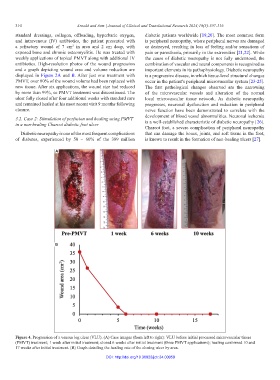
        Figure 4. Progression of a venous leg ulcer (VLU). (A) Case images (from left to right): VLU before initial processed microvascular tissue
        (PMVT) treatment; 1 week after initial treatment; closed 6 weeks after initial treatment (three PMVT applications); healing confirmed 10 and
        17 weeks after initial treatment. (B) Graph detailing the healing rate of the closing ulcer by area.
                                               DOI: http://doi.org/10.36922/jctr.24.00059

