


Page 41 - JCTR-10-6
P. 41
Aminizadeh et al. | Journal of Clinical and Translational Research 2024; 10(6): 348-356   351
        molecules to pass through the filter. In the final step, the RNAs   the  HIIT  +  MitoQ  group  exhibited  increased  MFN1  protein
        in the column were eluted from the column using an elution   levels compared to the MitoQ group (F = 18.64, p < 0.0001)
        buffer and collected  in sterile tubes.  Then, the concentration   (Figure 1B). The gene expression of Opa1, Fis1, and Mfn2 was
        and purity of the total extracted RNA were determined using   unaffected by either the HIIT + MitoQ or ET + MitoQ regimens
        a nanodrop instrument (Nanodrop-KLAB, South Korea). The   (Figures 2-4).
        cDNA was synthesized from total RNAs while to inhibit the   4. Discussion
        RNase  enzyme,  RNasin  (RNase  inhibitor)  was  added  to  the
        reaction  mixture  (Parstous  Biotechnology,  Iran).  Real-time   The results of this study demonstrated that MitoQ alone did
        PCR  was  performed  on  cDNA  with  polymerase  enzyme,   not change the expression of factors involved in mitochondrial
        Master Mix Green (Ampliqon, Denmark), and specific primers   dynamics, but combination of MitoQ with exercise training led
        (Table 1) for the target genes. The 18s rRNA gene was used   to the modulation of their expression. Compared to HIIT, ET
        as the housekeeping gene. After real-time PCR, Ct values were   caused more remarkable changes in gene and protein expression
        obtained  for  both  target  and  reference  genes.  The  ∆Ct  value   in skeletal muscle. ET significantly increased protein expression
        indicates the difference of Ct values between the target gene   of DRP1 and MFN1 as well as Opa1 gene expression, while
        and the housekeeping gene.  The 2 -ΔΔCT  formula was used to   HIIT  only  elevated  the  MFN1  protein  level.  These  findings
        determine relative gene expression [31].               suggest that in skeletal  muscle, ET affects proteins involved
                                                               in both mitochondrial fusion and fission but HIIT affects only
        2.6. Statistical analysis                              factors involved in mitochondrial fusion.
          Data  are  presented  as  mean  ±  standard  deviation  (SD).   The increase in MFN2 levels improves muscle performance
        After assessing data normality with the Kolmogorov–Smirnov   following appropriate intervention. Intermittent aerobic exercise
        test,  one-way  analysis  of  variance  (ANOVA)  was  used  for   training  improves energy access and reduces oxidative  stress
        comparisons between groups,  followed by  Tukey’s  post-hoc   damage by increasing the expression of MFN2 and OPA1 [32].
        test. p < 0.05 was considered significant. In addition, seven rats   It seems that when the rats performed ET, due to aerobic
        were allocated to each group to achieve the effect size (f) of   conditions (in this case, most energy production is produced by
        9.044 and a study power of 95% (1-β error probe).      mitochondria through aerobic oxidation), the proteins related to
                                                               both fusion and fission processes increased in levels and helped
        3. Results                                             to improve  the dynamics  of mitochondria  to ensure optimal
                                                               mitochondrial capacity, whereas through HIIT, due to the presence
          Compared  to  the  control  group, the  ET groups exhibited   of alternating aerobic and anaerobic conditions, metabolic and
        significantly  increased  protein  levels  of  DRP1  (F  =  39.09,   energy requirements were adjusted accordingly. Mitochondrial
        p  <  0.0001)  and  MFN1  (F  =  18.64,  p = 0.0003), as well   dynamics  is dependent  on metabolic  conditions  [33].  Due  to
        as  Opa1 gene expression (F  =  4.96,  p = 0.02) in skeletal   this, mitochondria undergo biogenesis and fusion through PGC-
        muscle (Figures  1A  and  B, and  Figure  2). Meanwhile, HIIT   1α [34,35] to meet energy requirements, and at the same time,
        only increased MFN1 protein levels (F = 18.64, p < 0.0001)   the  progression  towards  fission  happens  to  remove  damaged
        (Figure 1B). MitoQ did not have a significant effect on the gene   mitochondria [36]. While our results indicated that MitoQ alone
        and protein expression (Figures 1-4). However, its combination   did not significantly alter the expression of factors involved in
        with both exercise modalities caused significant effects. In the   mitochondrial  dynamics, it is important  to highlight that the
        MitoQ-treated groups separately receiving ET or HIIT, DRP1   interplay between exercise training and MitoQ treatment reveals
        protein  levels  increased,  when compared  to the  levels  in the   critical insights into this relationship. Specifically, our findings
        MitoQ group (F = 39.09, p = 0.0006; F = 39.09, p < 0.0001;   demonstrated  that  the  combination  of exercise  training  and
        respectively)  (Figure  1A).  Furthermore,  we  found  that  only   MitoQ led to enhanced expression of certain proteins involved
                                                               in mitochondrial dynamics, particularly in the context of ET,
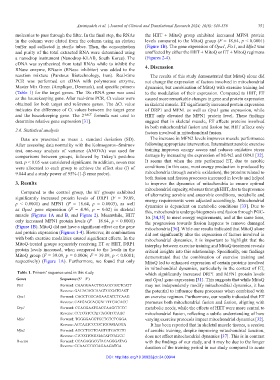
        Table 1. Primers’ sequence used in this study          which significantly increased DRP1 and MFN1 protein levels
        Genes              Sequences (5’ – 3’)                 and Opa1 gene expression [31]. This suggests that while MitoQ
        Fis1               Forward: CAAGGAACTGGAGCGGCTCATT     may not independently modify mitochondrial dynamics, it has
                           Reverse: GACACAGCAAGTCCGATGAGT      the potential to influence these processes when combined with
        Opa1               Forward: CAGCTGGCAGAAGATCTCAAG      an exercise regimen. Furthermore, our results indicated that ET
                           Reverse: CATGAGCAGGATTTTGACACC      promotes both mitochondrial fusion and fission, aligning with
        Drp1               Forward: CCAGGAATGACCAAGGTCCC       metabolic needs, while the effects of HIIT were more central to
                           Reverse: CCTCGTCCATCAGGTCCAAC       mitochondrial fusion, reflecting a subtle understanding of how
        Mfn1               Forward: TGGGGAGGTGCTGTCTCGGA       varying exercise protocols impact mitochondrial dynamics [32].
                           Reverse: ACCAATCCCGCTGGGGAGGA         It has been reported that in skeletal muscle tissues, a session
        Mfn2               Forward: AGCCTGGTGAGTGTGATGTG       of aerobic training, despite improving mitochondrial function,
                           Reverse: CTCCGTGGTGACATCGATCC       does not affect mitochondrial dynamics [37]. This is in contrast
        B-actin            Forward: CCAGAGGCGTACAGGGATAG       with the findings of our study, and it may be due to the longer
                           Reverse: CCAACCGCGAGAAGATGA         duration of the training period in our study compared to acute

                                               DOI: http://doi.org/10.36922/jctr.24.00044

