


Page 51 - JCTR-11-1
P. 51
Journal of Clinical and
            Translational Research                                        Hesperidin enhances repair of γ-irradiated wounds


                                                               used alone or in combination with surgery or other
                                                               modalities for treating neoplastic disorders. However,
                                                               radiotherapy poses a critical challenge: it must balance the
                                                               eradication of cancerous cells with the adverse effects on
                                                               surrounding non-neoplastic tissues. This dichotomy raises
                                                               significant concerns for surgeons regarding the malignant
                                                               potential of irradiated tissue beds and wound-healing
                                                               complications. 73-76  Given these challenges, it is imperative
                                                               to explore new strategies that can mitigate the deleterious
                                                               effect of ionizing radiation on normal tissue while
                                                               enhancing wound repair and regeneration. Hesperidin,
                                                               a dietary flavanone, has been investigated for its wound-
                                                               healing potential in mice exposed to different doses of
                                                               fractionated γ-irradiation and subsequently inflicted with
                                                               full-thickness open excision wounds.
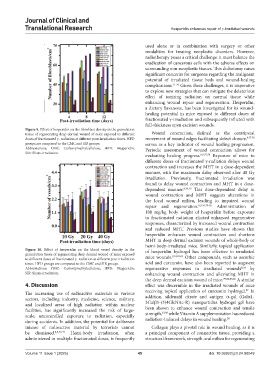
            Figure 9. Effect of hesperidin on the fibroblast density in the granulation
            tissue of regenerating deep dermal wound of mice exposed to different   Wound  contraction,  defined  as  the  centripetal
            doses of fractionated γ- radiation at different post-irradiation times. HPD   movement of wound edges facilitating defect closure, 8,77,78
            groups are compared to the CMC and SIR groups.     serves as a key indicator of wound healing progression.
            Abbreviations: CMC: Carboxymethylcellulose; HPD: Hesperidin;   Periodic assessment of wound contraction allows for
            SIR: Sham-irradiation.
                                                               evaluating healing progress. 8,9,77,78  Exposure of mice to
                                                               different doses of fractionated  γ-radiation delays wound
                                                               contraction and increases the MHT in a dose-dependent
                                                               manner,  with  the  maximum  delay  observed  after  40  Gy
                                                               irradiation. Previously,  fractionated irradiation  was
                                                               found to delay wound contraction and MHT in a dose-
                                                               dependent manner. 8,34,79  This dose-dependent delay in
                                                               wound contraction and MHT suggests alterations in
                                                               the local wound milieu, leading to impaired wound
                                                               repair and regeneration. 8,9,34,79-82  Administration of
                                                               100  mg/kg  body  weight  of  hesperidin  before  exposure
                                                               to fractionated radiation elicited enhanced regenerative
                                                               responses, characterized by increased wound contraction
                                                               and reduced MHT. Previous studies have shown that
                                                               hesperidin enhances wound contraction and shortens
                                                               MHT in deep dermal excision wounds of whole-body or
                                                               hemi-body-irradiated mice. Similarly, topical application
            Figure  10. Effect of hesperidin on the blood vessel density in the   of  hesperidin  hydrogel  has  been  effective  in  irradiated
            granulation tissue of regenerating deep dermal wound of mice exposed   9,10,83,84
            to different doses of fractionated γ- radiation at different post-irradiation   mice wounds.   Other compounds, such as ascorbic
            times. HPD groups are compared to the CMC and SIR groups.  acid and curcumin, have also been reported to augment
            Abbreviations: CMC: Carboxymethylcellulose; HPD: Hesperidin;   regenerative responses in irradiated wounds  by
                                                                                                        8,34
            SIR: Sham-irradiation.                             enhancing wound contraction and alleviating MHT in
                                                               the deep dermal excision wound of mice. 79,80,85,86  A similar
            4. Discussion                                      effect was  discernible  in  the  irradiated wounds  of mice
                                                                                                          87
            The increasing use of radioactive materials in various   receiving topical application of curcumin hydrogel.  In
            sectors,  including  industry,  medicine,  science,  military,   addition, sildenafil citrate and antigen  α-gal (Galα1-
            and localized areas of high radiation within nuclear   3Galβ1-(3)4GlcNAc-R) nanoparticles hydrogel gel have
            facilities, has significantly increased the risk of large-  been shown to enhance wound contraction and tensile
                                                                      23,88
            scale, uncontrolled exposure to radiation, especially   strength,   while Vitamin A supplementation has reduced
                                                                                                  28
            during accidents. In addition, the potential for deliberate   radiation-induced delays in wound healing.
            misuse of radioactive material by terrorists cannot   Collagen plays a pivotal role in wound healing, as it is
            be dismissed. 8,9,70-72  Hemi-body irradiation, often   a principal component of connective tissue, providing a
            administered in multiple fractionated doses, is frequently   structural framework, strength, and milieu for regenerating


            Volume 11 Issue 1 (2025)                        45                            doi: 10.36922/jctr.24.00049

