


Page 50 - JCTR-11-2
P. 50
Journal of Clinical and
            Translational Research                                                       CMV secular trends and race


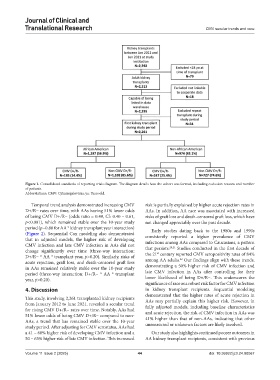
            Figure 1. Consolidated standards of reporting trials diagram. The diagram details how the cohort was formed, including exclusion reasons and number
            of patients.
            Abbreviations: CMV: Cytomegalovirus; yo: Years old.

              Temporal trend analysis demonstrated increasing CMV   risk is partially explained by higher acute rejection rates in
            D+/R− rates over time, with AAs having 51% lower odds   AAs. In addition, AA race was associated with increased
            of being CMV D+/R− (odds ratio = 0.49, CI: 0.40 – 0.61,   risks of graft loss and death-censored graft loss, which have
            p<0.001), which remained stable over the 10-year study   not changed appreciably over the past decade.
            period (p=0.80 for AA * kidney transplant year interaction)   Early studies dating back to the 1980s and 1990s
            (Figure  2). Sequential Cox  modeling  also demonstrated   consistently reported a higher prevalence of CMV
            that in adjusted models, the higher risk of developing   infections among AAs compared to Caucasians, a pattern
            CMV infection and late CMV infection in AAs did not          20,21
            change significantly over time (three-way interaction:   that persists.   Studies conducted in the first decade of
                                                               the 21  century reported CMV seropositivity rates of 84%
                                                                    st
            D+/R− * AA * transplant year, p>0.20). Similarly, risks of        22
            acute rejection, graft loss, and death-censored graft loss   among AA adults.  Our findings align with these trends,
            in AAs remained relatively stable over the 10-year study   demonstrating a 50% higher risk of CMV infection and
            period (three-way interaction: D+/R− * AA * transplant   late CMV infection in AAs after controlling for their
            year, p>0.20).                                     lower likelihood of being D+/R−. This underscores the
                                                               significance of race as a robust risk factor for CMV infection
            4. Discussion                                      in kidney transplant recipients. Sequential modeling
                                                               demonstrated that the higher rates of acute rejection in
            This study, involving 2,261 transplanted kidney recipients   AAs may partially explain this higher risk. However, in
            from January 2012 to June 2021, revealed a secular trend   fully  adjusted  models,  including  baseline  characteristics
            for rising CMV D+/R− rates over time. Notably, AAs had   and acute rejection, the risk of CMV infection in AAs was
            51% lower odds of being CMV D+/R− compared to non-  41% higher than that of non-AAs, indicating that other
            AAs, a trend that has remained stable over the 10-year
            study period. After adjusting for CMV serostatus, AAs had   unmeasured or unknown factors are likely involved.
            a 41 – 68% higher risk of developing CMV infection and a   Our study also highlights continued poorer outcomes in
            50 – 63% higher risk of late CMV infection. This increased   AA kidney transplant recipients, consistent with previous


            Volume 11 Issue 2 (2025)                        44                            doi: 10.36922/jctr.24.00067

