


Page 54 - JCTR-11-2
P. 54
Journal of Clinical and
            Translational Research                                                       CMV secular trends and race


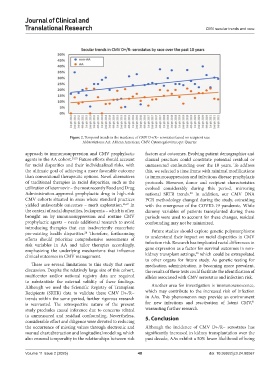
                               Figure 2. Temporal trends in the incidence of CMV D+/R− serostatus based on recipient race
                                    Abbreviations: AA: African American; CMV: Cytomegalovirus; qtr: Quarter.

            approach to immunosuppression and CMV prophylactic   factors and outcomes. Evolving patient demographics and
            agents in the AA cohort. 24,25  Future efforts should account   clinical practices could constitute potential residual or
            for racial disparities and their individualized risks, with   unmeasured confounding over the 10  years. To address
            the ultimate goal of achieving a more favorable outcome   this, we selected a time frame with minimal modifications
            than conventional therapeutic options. Novel alternatives   to immunosuppression and infectious disease prophylaxis
            of traditional therapies in racial disparities, such as the   protocols. However, donor and recipient characteristics
            utilization of letermovir – the most recently Food and Drug   evolved considerably during this period, mirroring
            Administration-approved prophylactic drug in high-risk   national SRTR trends.  In addition, our CMV DNA
                                                                                  29
            CMV cohorts situated in areas where standard practices   PCR methodology changed during the study, coinciding
            yielded unfavorable outcomes – merit exploration. 26,27  In   with the emergence of the COVID-19 pandemic. While
            the context of racial disparities, leukopenia – which is often   dummy variables of patients transplanted during these
            brought on by immunosuppression and routine CMV    periods were used to account for these changes, residual
            prophylactic agents – needs additional research to avoid   confounding may not be minimized.
            introducing therapies that can inadvertently exacerbate
                                     28
            pre-existing health disparities.  Therefore, forthcoming   Future studies should explore genetic polymorphisms
            efforts  should  prioritize  comprehensive  assessments  of   to understand their impact on racial disparities in CMV
            risk variables in AA and tailor therapies accordingly,   infection risk. Research has implicated racial differences in
            emphasizing the underlying mechanisms that influence   gene expression as a factor for survival outcomes in non-
                                                                                    30
            clinical outcomes in CMV management.               kidney transplant settings,  which could be extrapolated
                                                               to other organs for future study. As genetic testing for
              There are several limitations to this study that merit   medication administration is becoming more prevalent,
            discussion. Despite the relatively large size of this cohort,   the results of these tests could facilitate the identification of
            multicenter and/or national registry data are required   alleles associated with CMV serostatus and infection risk.
            to substantiate the external validity of these findings.
            Although we used the Scientific Registry of Transplant   Another area for investigation is immunosenescence,
            Recipients (SRTR) data to validate these CMV D+/R−   which may contribute to the increased risk of infection
            trends within the same period, further rigorous research   in AAs. This phenomenon may provide an environment
                                                                                                            31
            is warranted. The retrospective nature of the present   for new infections and reactivation of latent CMV,
            study precludes causal inference due to concerns related   warranting further research.
            to unmeasured and residual confounding. Nevertheless,   5. Conclusion
            considerable effort and diligence were devoted to reducing
            the occurrence of missing values through electronic and   Although the incidence of CMV D+/R− serostatus has
            manual chart abstraction and longitudinal modeling, which   significantly increased in kidney transplantation over the
            also ensured temporality in the relationships between risk   past decade, AAs exhibit a 50% lower likelihood of being


            Volume 11 Issue 2 (2025)                        48                            doi: 10.36922/jctr.24.00067

