


Page 79 - JCTR-11-2
P. 79
Journal of Clinical and
            Translational Research                                                 Fetal posterior fossa imaging findings


                         A                      B                       C


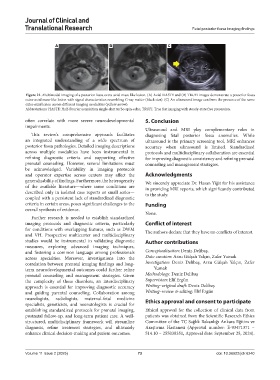
            Figure 21. Multimodal imaging of a posterior fossa extra-axial mass-like lesion. (A) Axial HASTE and (B) TRUFI images demonstrate a posterior fossa
            extra-axial mass-like lesion with signal characteristics resembling G-ray matter (black star). (C) An ultrasound image confirms the presence of the same
            extra-axial lesion across different imaging modalities (yellow arrow).
            Abbreviations: HASTE: Half-Fourier acquisition single-shot turbo spin-echo; TRUFI: True fast imaging with steady-state free precession.

            often correlate with more severe neurodevelopmental   5. Conclusion
            impairments.
                                                               Ultrasound and MRI play complementary roles in
              This review’s comprehensive approach facilitates   diagnosing fetal posterior fossa anomalies. While
            an integrated understanding of a wide spectrum of   ultrasound is the primary screening tool, MRI enhances
            posterior fossa pathologies. Detailed imaging descriptions   accuracy when ultrasound is limited. Standardized
            across multiple modalities have been instrumental in   protocols and multidisciplinary collaboration are essential
            refining diagnostic criteria and supporting effective   for improving diagnostic consistency and refining prenatal
            prenatal counseling. However, several limitations must   counseling and management strategies.
            be acknowledged. Variability in imaging protocols
            and operator expertise across centers may affect the   Acknowledgments
            generalizability of findings. Furthermore, the heterogeneity   We sincerely appreciate Dr. Hasan Yiğit for his assistance
            of the available literature—where some conditions are   in providing MRI reports, which significantly contributed
            described only in isolated case reports or small series—  to the study.
            coupled with a persistent lack of standardized diagnostic
            criteria in certain areas, poses significant challenges to the   Funding
            overall synthesis of evidence.
                                                               None.
              Further research is needed to establish standardized
            imaging protocols and diagnostic criteria, particularly   Conflict of interest
            for conditions with overlapping features, such as DWM   The authors declare that they have no conflicts of interest.
            and VH. Prospective multicenter and multidisciplinary
            studies would be instrumental in validating diagnostic   Author contributions
            measures, exploring advanced imaging techniques,
            and fostering a common language among professionals   Conceptualization: Deniz Delibaş,
            across specialties. Moreover, investigations into the   Data curation: Arzu Gülşah Yalçın, Zafer Yumak
            correlation between prenatal imaging findings and long-  Investigation:  Deniz Delibaş, Arzu Gülşah Yalçın, Zafer
            term neurodevelopmental outcomes could further refine   Yumak
            prenatal counseling and management strategies. Given   Methodology: Deniz Delibaş
            the complexity of these disorders, an interdisciplinary   Supervision: Elif Ergün
            approach  is essential for  improving  diagnostic  accuracy   Writing–original draft: Deniz Delibaş
            and  guiding  parental  counseling.  Collaboration  among   Writing–review & editing: Elif Ergün
            neurologists,  radiologists,  maternal-fetal  medicine  Ethics approval and consent to participate
            specialists, geneticists, and neonatologists is crucial for
            establishing standardized protocols for prenatal imaging,   Ethical approval for the collection of clinical data from
            postnatal follow-up, and long-term patient care. A well-  patients was obtained from the Scientific Research Ethics
            structured, multidisciplinary framework will streamline   Committee of the TC Sağlık Bakanlığı Ankara Eğitim ve
            diagnosis, refine treatment strategies, and ultimately   Araştırma Hastanesi (Approval number: E-93471371 –
            enhance clinical decision-making and patient outcomes.  514.10 – 255038351, Approval date: September 25, 2024).


            Volume 11 Issue 2 (2025)                        73                               doi: 10.36922/jctr.6240

