


Page 76 - JCTR-11-2
P. 76
Journal of Clinical and
            Translational Research                                                 Fetal posterior fossa imaging findings


             A                    B                             A                     B


                        C
                                                                C                      D


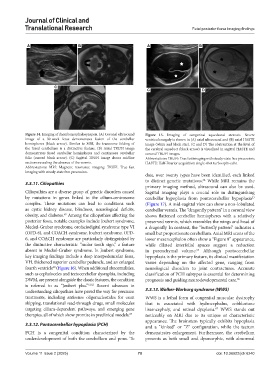
            Figure 14. Imaging of rhombencephalosynapsis. (A) Coronal ultrasound   Figure  15. Imaging  of congenital aqueductal stenosis.  Severe
            image of a 30-week fetus demonstrates fusion of the cerebellar   ventriculomegaly is shown in (A) axial ultrasound and (B) axial HASTE
            hemispheres (black arrow). Similar to MRI, the transverse folding of   image (white and black star). (C and D) The obstruction at the level of
            the fused cerebellum is a distinctive feature. (B) Axial TRUFI image   the cerebral aqueduct (black arrow) is visualized in sagittal HASTE and
            demonstrates fused cerebellar hemispheres and continuous cerebellar   coronal TRUFI images.
            folia (curved black arrow). (C) Sagittal TRUFI image shows midline   Abbreviations: TRUFI: True fast imaging with steady-state free precession;
            sections revealing the absence of the vermis.      HASTE: Half-Fourier acquisition single-shot turbo spin-echo.
            Abbreviations: MRI: Magnetic resonance imaging; TRUFI: True fast
            imaging with steady-state free precession.
                                                               date, over twenty types have been identified, each linked
                                                               to distinct genetic mutations.  While MRI remains the
                                                                                       64
            3.3.11. Ciliopathies
                                                               primary imaging method, ultrasound can also be used.
            Ciliopathies are a diverse group of genetic disorders caused   Sagittal imaging plays a crucial role in distinguishing
            by mutations in genes linked to the cilium-centrosome   cerebellar hypoplasia from pontocerebellar hypoplasia
                                                                                                            53
            complex.  These  mutations  can  lead  to  conditions  such   (Figure 17). A mid-sagittal view can show a non-lobulated
            as cystic kidney disease, blindness, neurological deficits,   cerebellar vermis. The “dragonfly pattern” in a coronal view
                            59
            obesity, and diabetes.  Among the ciliopathies affecting the   shows flattened cerebellar hemispheres with a relatively
            posterior fossa, notable examples include Joubert syndrome,   preserved vermis, which resembles the wings and head of
            Meckel-Gruber syndrome, orofaciodigital syndrome type VI   a dragonfly. In contrast, the “butterfly pattern” indicates a
            (OFD-6), and COACH syndrome. Joubert syndrome, OFD-  small but proportionate cerebellum. Axial MRI scans of the
            6, and COACH syndrome are particularly distinguished by   lower mesencephalon often show a “Figure 8” appearance,
            the distinctive characteristic “molar tooth sign,” a feature   while dilated interfolial spaces suggest a reduction
            absent in Meckel-Gruber syndrome. In Joubert syndrome,   in parenchymal volume.  Although pontocerebellar
                                                                                     65
            key imaging findings include a deep interpeduncular fossa,   hypoplasia is the primary feature, its clinical manifestation
            VH, thickened superior cerebellar peduncle, and an enlarged   varies depending on the affected gene, ranging from
            fourth ventricle  (Figure 16). When additional abnormalities,   neurological disorders to joint contractures. Accurate
                        60
            such as cephaloceles and tectocerebellar dysraphia, including   classification of PCH subtypes is essential for determining
            DWM, are present alongside the classic features, the condition   prognosis and guiding neurodevelopmental care. 66
            is referred to as “Joubert plus.” 61,62  Recent advances in
            understanding ciliopathies have paved the way for precision   3.3.13. Walker-Warburg syndrome (WWS)
            treatments, including antisense oligonucleotides for exon   WWS is a lethal form of congenital muscular dystrophy
            skipping, translational read-through drugs, small molecules   that is associated with hydrocephalus, cobblestone
            targeting cilium-dependent pathways, and emerging gene   lissencephaly, and retinal dysplasia.  WWS stands out
                                                                                             67
            therapies, all of which show promise in preclinical models. 63  noticeably on MRI due to its unique or characteristic
                                                               appearance. The brainstem typically exhibits hypoplasia
            3.3.12. Pontocerebellar hypoplasia (PCH)           and a “kinked” or “Z” configuration, while the tectum

            PCH  is  a  congenital  condition  characterized  by  the   demonstrates enlargement. Furthermore, the cerebellum
            underdevelopment of both the cerebellum and pons. To   presents  as  both  small  and  dysmorphic,  with  abnormal


            Volume 11 Issue 2 (2025)                        70                               doi: 10.36922/jctr.6240

