


Page 71 - JCTR-11-2
P. 71
Journal of Clinical and
            Translational Research                                                 Fetal posterior fossa imaging findings


             A                   B                              A                     B


                                                                C                     D

             C                     D


                                                                E                      F

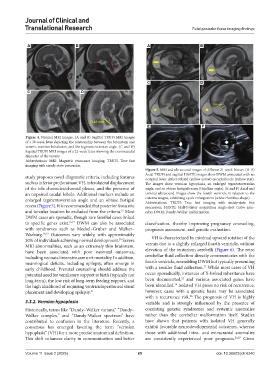
            Figure 4. Normal MRI images. (A and B) Sagittal TRUFI MRI images
            of a 30-week fetus depicting the relationship between the brainstem and
            vermis, vermian lobulation, and the tegmentovermian angle. (C and D)
            Sagittal TRUFI MRI images of a 22-week fetus showing the craniocaudal
            diameter of the vermis.
            Abbreviations: MRI: Magnetic resonance imaging; TRUFI: True fast
            imaging with steady-state precession.
                                                               Figure 5. MRI and ultrasound images of different 21-week fetuses. (A-D)
                                                               Axial TRUFI and sagittal HASTE images show DWM associated with an
            study proposes novel diagnostic criteria, including features   occipital bone defect-related (yellow arrow) encephalocele (yellow star).
            such as inferior predominant VH, inferolateral displacement   The images show vermian hypoplasia, an enlarged tegmentovermian
            of the tela choroidea/choroid plexus, and the presence of   angle, and an obtuse fastigial recess (thin line angle). (E and F) Axial and
            an unpaired caudal lobule. Additional markers include an   coronal ultrasound images show the fourth ventricle in relation to the
            enlarged tegmentovermian angle and an obtuse fastigial   cisterna magna, exhibiting cystic enlargement (white rhombus shape).
                                                               Abbreviations: TRUFI: True fast imaging with steady-state free
            recess (Figure 5). It is recommended that posterior fossa size   precession; HASTE: Half-Fourier acquisition single-shot turbo spin-
            and torcular location be excluded from the criteria.  Most   echo; DWM: Dandy-Walker malformation.
                                                     15
            DWM cases are sporadic, though rare familial cases linked
            to specific genes exist. 16,17  DWM can also be associated   classification, thereby improving pregnancy counseling,
            with syndromes such as Meckel–Gruber and Walker–   prognosis assessment, and genetic evaluation.
            Warburg. 18,19   Outcomes  vary  widely, with approximately
            30% of individuals achieving normal development.  Severe   VH is characterized by minimal upward rotation of the
                                                    20
            MRI abnormalities, such as an extremely thin brainstem,   vermis due to a slightly enlarged fourth ventricle, without
            have been associated with poor neonatal outcomes,   elevation of the tentorium cerebelli (Figure 6). The retro
            including neonatal intensive care unit mortality. In addition,   cerebellar fluid collection directly communicates with the
            neurological deficits, including epilepsy, often emerge in   fourth ventricle, resembling DWM but typically presenting
                                                                                        22
            early childhood. Prenatal counseling should address the   with a smaller fluid collection.  While most cases of VH
            potential need for ventilatory support at birth (typically not   occur sporadically, instances of X-linked inheritance have
                                                                              23
            long-term), the low risk of long-term feeding support, and   been documented,  and various associated genes have
                                                                           24
            the high likelihood of requiring ventriculoperitoneal shunt   been identified.  Isolated VH poses no risk of recurrence;
            placement and developing epilepsy. 21              however, cases with a genetic basis may be associated
                                                               with a recurrence risk.  The prognosis of VH is highly
                                                                                  25
            3.3.2. Vermian hypoplasia                          variable and is strongly influenced by the presence of
            Historically, terms like “Dandy–Walker variant,” “Dandy–  coexisting genetic syndromes and systemic anomalies
            Walker complex,” and “Dandy-Walker spectrum” have   rather than the cerebellar malformation itself. Studies
            contributed to confusion in the literature. Recently, a   have shown that patients with isolated VH generally
            consensus has emerged favoring the term “vermian   exhibit favorable neurodevelopmental outcomes, whereas
            hypoplasia” (VH) for a more precise anatomical definition.   those with additional intra-  and extracranial anomalies
            This shift enhances clarity in communication and better   are consistently experienced poor prognosis. 26,27  Given


            Volume 11 Issue 2 (2025)                        65                               doi: 10.36922/jctr.6240

