


Page 73 - JCTR-11-2
P. 73
Journal of Clinical and
            Translational Research                                                 Fetal posterior fossa imaging findings


                   A                                            A                     B


                                                                         C
             B                      C


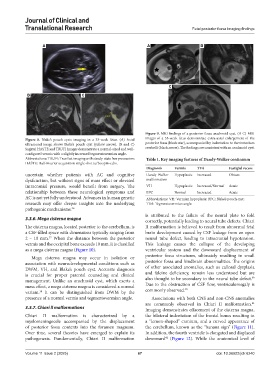
                                                               Figure 9. MRI findings of a posterior fossa arachnoid cyst. (A-C) MRI
            Figure  8. Blake’s pouch  cysts imaging in a  33-week  fetus. (A)  Axial   images of a 35-week fetus demonstrate extra-axial enlargement of the
            ultrasound image shows Blake’s pouch cyst (yellow arrow). (B and C)   posterior fossa (black star), accompanied by indentation to the tentorium
            Sagittal HASTE and TRUFI images demonstrate a normal-sized and well-  cerebelli (black arrow). The findings are consistent with an arachnoid cyst.
            configured vermis with a slightly increased tegmentovermian angle.
            Abbreviations: TRUFI: True fast imaging with steady-state free precession;   Table 1. Key imaging features of Dandy‑Walker continuum
            HASTE: Half-Fourier acquisition single-shot turbo spin-echo.
                                                               Diagnosis   Vermis    TVA          Fastigial recess
            uncertain whether  patients  with  AC and  cognitive   Dandy-Walker   Hypoplastic  Increased  Obtuse
            dysfunction, but without signs of mass effect or elevated   malformation
            intracranial pressure, would benefit from surgery. The   VH    Hypoplastic  Increased/Normal  Acute
            relationship between these neurological symptoms and   BPC     Normal    Increased    Acute
            AC is not yet fully understood. Advances in human genetic   Abbreviations: VH: Vermian hypoplasia; BPC: Blake’s pouch cyst;
            research  may  offer  deeper  insights  into  the  underlying   TVA: Tegmentovermian angle.
            pathogenic mechanisms. 36
                                                               is attributed to the failure of the neural plate to fold
            3.3.6. Mega cisterna magna                         correctly, potentially leading to neural tube defects. Chiari
            The cisterna magna, located posterior to the cerebellum, is   II malformation is believed to result from abnormal fetal
            a CSF-filled space with dimensions typically ranging from   brain development caused by CSF leakage from an open
                      37
            2 – 10  mm.  When the distance between the posterior   neural tube defect, leading to intracranial hypotension.
            vermis and the occipital bone exceeds 10 mm, it is classified   This leakage causes the collapse of the developing
            as a mega cisterna magna (Figure 10).              ventricular system and the downward displacement of
              Mega cisterna magna may occur in isolation or    posterior fossa structures, ultimately resulting in small
            association with neurodevelopmental conditions such as   posterior fossa and hindbrain abnormalities. The origins
            DWM, VH, and Blake’s pouch cyst. Accurate diagnosis   of  other  associated  anomalies,  such  as  callosal  dysplasia
            is crucial for proper parental counseling and clinical   and falcine deficiency, remain less understood but are
                                                                                                            39
            management. Unlike an arachnoid cyst, which exerts a   also thought to be secondary to the neural tube defect.
            mass effect, a mega cisterna magna is considered a normal   Due to the obstruction of CSF flow, ventriculomegaly is
            variant.  It can be distinguished from DWM by the   commonly observed. 40
                  38
            presence of a normal vermis and tegmentovermian angle.  Associations with both CNS and non-CNS anomalies
                                                               are commonly observed in Chiari II malformation.
                                                                                                            41
            3.3.7. Chiari II malformations                     Imaging demonstrates effacement of the cisterna magna,
            Chiari II malformation is characterized by a       the bilateral indentation of the frontal bones resulting in
            myelomeningocele  accompanied by  the displacement   a  “lemon-shaped”  cranium,  and  a  curved  appearance  of
            of posterior fossa contents into the foramen magnum.   the cerebellum, known as the “banana sign” (Figure 11).
            Over time, several theories have emerged to explain its   In addition, the fourth ventricle is elongated and displaced
            pathogenesis. Fundamentally, Chiari II malformation   downward  (Figure  12). While the anatomical level of
                                                                       42

            Volume 11 Issue 2 (2025)                        67                               doi: 10.36922/jctr.6240

