


Page 27 - JCTR-9-4
P. 27
Marchand et al. | Journal of Clinical and Translational Research 2023; 9(4): 236-245   243


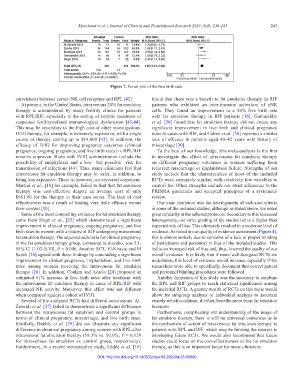
                                               Figure 7. Forest plot of the live birth rate.

        correlations between certain NK cell receptors and RPL [42].  found that there was a benefit to fat emulsion therapy in RIF
          At present, in the United States, intravenous 20% fat emulsion   patients  who  exhibited  an  over-immune  activation  of  uNK
        therapy  is  administered  by  many  fertility  clinics  for  patients   cells.  They  found  an  improvement  to  a  54%  live  birth  rate
        with RPL/RIF, especially in the setting of empiric treatment of   with  fat  emulsion  therapy  in  RIF  patients  [16].  Gamaleldin
        suspected  fertility-related  immunological  dysfunction  [43,44].   et al. [28] found that fat emulsion therapy did not create any
        This may be secondary to the high cost of other investigations.   significant  improvement  in  live  birth  and  clinical  pregnancy
        IVIG therapy, for example, is extremely expensive, with a single   rates in cases with RIF, and Cohen et al. [30] reported a similar
        course of therapy costing up to $14,000 [43]. In addition, the   lack  of  efficacy  in  patients  aged  40–42  years  with  history  of
        efficacy  of  IVIG  for  improving  pregnancy  outcomes  (clinical   miscarriage [30].
        pregnancy, ongoing pregnancy, and live birth rates) in RPL/RIF   To the best of our knowledge, this meta-analysis is the first
        remains unproven. Risks with IVIG administration include the   to  investigate  the  effect  of  intravenous  fat  emulsion  therapy
        possibility  of  anaphylaxis  and  a  low—but  possible—risk  for   on  different  pregnancy  outcomes  in  women  suffering  from
        transmission of infections [44]. Thus, many clinicians feel that   recurrent miscarriage or implantation failure. Strengths of our
        intravenous fat emulsion therapy may be safer, in addition, to   study include that the characteristics of most of the included
        being less expensive. There is, however, no universal consensus.   RCTs were extremely similar, with relatively few variables to
        Martini et al., [10] for example, failed to find that fat emulsion   control for. Other strengths include our strict adherence to the
        therapy  was  cost-effective  despite  an  average  cost  of  only   PRISMA  guidelines  and  accepted  principles  of  a  systematic
        $681.00  for  the  therapy  in  their  case  series. The  lack  of  cost   review.
        effectiveness was a result of finding very little efficacy versus   Our main limitation was the heterogeneity of inclusion criteria
        their control [10].                                     in some of the included studies, although as stated above, we noted
          Some of the most compelling evidence for fat emulsion therapy   great similarity in the adhered protocols. Secondary to this increased
        came  from  Singh  et  al.,  [25]  which  demonstrated  a  significant   heterogeneity, our strict grading of the studies led to a higher than
        improvement in clinical pregnancy, ongoing pregnancy, and live   expected risk of bias. This ultimately resulted in a moderate level of
        birth rates in women with a history of RIF undergoing intravenous   evidence. As noted in our quality of evidence assessment (Figure 4),
        fat emulsion therapy. The adjusted odds ratio for clinical pregnancy   this is almost entirely due to concerns of a lack of proper blinding
        in the fat emulsion therapy group, compared to placebo, was 3.1,   of participants and personnel in four of the included studies. This
        95% CI [1.02–9.70], P = 0.046. Another RCT, El-Khayat and El   led to an increased risk of bias and, thus, lowered the quality of our
        Sadek [26] agreed with these findings by concluding a significant   overall evidence. It is likely that if more well-designed RCTs are
        improvement in clinical pregnancy, implantation, and live birth   undertaken, this level of evidence would increase, especially if the
        rates  among  women  receiving  the  intravenous  fat  emulsion   researchers were able to specifically document that correct patient
        therapy [26]. In addition, Coulam and Acacio [24] proposed an   and personnel blinding procedures were followed.
        estimated  61%  increase  in  live  birth  rates  after  treatment  with   Another limitation of this study was the necessity to combine
        the intravenous fat emulsion therapy in cases of RPL/RIF with   the RPL and RIF groups to reach statistical significance among
        increased  NK  activity.  Moreover,  this  effect  was  not  different   the included RCTs. A greater wealth of RCTs on this topic would
        when compared against a cohort of IVIG.                 allow  for  subgroup  analysis  or  individual  analysis  to  ascertain
          Several of the analyzed RCTs had different conclusions. Al-  exactly which condition, if either, benefits more from fat emulsion
        Zebeidi et al. [27] failed to demonstrate a significant difference   therapies.
        between  the  intravenous  fat  emulsion  and  control  groups  in   Furthermore, complicating our understanding of the usage of
        terms of clinical pregnancy, miscarriage, and live birth rates.   fat emulsion therapy, there is still no universal consensus as to
        Similarly, Dakhly et al. [29] did not illustrate any significant   the mechanism of action of intravenous fat emulsion therapy in
        difference in chemical pregnancy among women with RPL after   patients with RPL and RIF, which may be limiting the interest in
        intravenous fat emulsion therapy (58.3% vs. 50.0%, P = 0.129   developing future RCTs. We would also recommend that future
        for  intravenous  fat  emulsion  vs.  control  group,  respectively).   studies could focus on the cost-effectiveness of the fat emulsion
        Furthermore, in a recent retrospective study, Lédée et al. [16]   therapy, as this is an important factor for many clinicians.
                                          DOI: http://dx.doi.org/10.18053/jctres.09.202304.23-00060

