


Page 53 - JCTR-9-4
P. 53
Seetharam et al. | Journal of Clinical and Translational Research 2023; 9(4):265-271   269
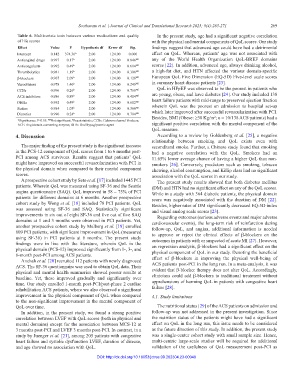
        Table 6. Multivariate tests between various medications and quality   In the present study, age had a significant negative correlation
        of life scores                                          with the physical and mental components of QoL scores. Our study
        Effect        Value   F    Hypothesis df  Error df  Sig.  findings suggest that advanced age could have had a detrimental
        Intercept     0.142  374.36 b  2.00    124.00  0.000    effect  on  QoL. Whereas,  patients’  age  was  not  associated  with
        Antianginal drugs  0.997  0.17 b  2.00  124.00  0.846 NS  any of the  World Health Organization  QoL-BREF domains
        Anticoagulants  0.992  0.49 b  2.00    124.00  0.614 NS  scores [22]. In addition, advanced age, always drinking alcohol,
        Thrombolytics  0.981  1.19 b  2.00     124.00  0.308 NS  a  high-fat  diet,  and  HTN  affected  the  various  domain-specific
        β-blockers    0.967  2.09 b   2.00     124.00  0.128 NS  European QoL Five Dimension (EQ-5D) Five-level scale scores
        Vasodilators  0.978  1.40 b   2.00     124.00  0.249 NS  in coronary heart disease patients [23].
        CCBs          0.996  0.26 b   2.00     124.00  0.768 NS    QoL in HFpEF was observed to be the poorest in patients who
        ACE inhibitors  0.986  0.89 b  2.00    124.00  0.414 NS  are young, obese, and have diabetes [24]. Our study included 138
        OHAs          0.992  0.49 b   2.00     124.00  0.612 NS  heart failure patients with mid-range to preserved ejection fraction
        Statins       0.984  1.03 b   2.00     124.00  0.360 NS  wherein  QoL was the  poorest  on  admission  to  hospital  set-up
        Diuretics     0.996  0.24 b   2.00     124.00  0.784 NS  which later improved after successful revascularization with PCI.
                                                                                           2
        *Significance P≤0.05;  Not significant;  Exact statistic; CCBs: Calcium channel blockers;   Besides, BMI (Obese: ≥30 Kg/m ; n = 10/138 ACS patients) had a
                               b
                     NS
        ACE: Angiotensin-converting enzyme; OHA: Oral hypoglycemic agent  significant positive correlation with the mental component of the
                                                                QoL measure.
        4. Discussion                                              According to a review by Goldenberg et al. [25], a negative
                                                                relationship  between  smoking  and  QoL  exists  even  with
          The major finding of the present study is the significant increase   secondhand smoke. Further, a Chinese study found that smoking
        in the PCS-12 component of QoL scores from 1 to 6 months post-  had a negative correlation  with  the QoL. Smokers had an
        PCI among ACS  survivors. Results suggest that patients’ QoL   11.65% lower average chance of having a higher QoL than non-
        might have improved on successful revascularization with PCI in   smokers [26]. Conversely, predictors such as smoking, tobacco
        the physical domain when compared to their mental component   chewing, alcohol consumption, and Killip class had no significant
        scores.                                                 association with the QoL scores in our study.
          A prospective cohort study by Seto et al. [17] included 1445 PCI   The present study results showed that both diabetes mellitus
        patients. Wherein QoL was measured using SF-36 and the Seattle   (DM) and HTN had no significant effect on any of the QoL scores.
        angina questionnaire (SAQ). QoL improved in 58 – 75% of PCI   While in a study with 364 diabetic patients, the physical domain
        patients for different domains at 6 months. Another prospective   score was negatively associated with the duration of DM [22].
        cohort study by Wong et al. [18] included 78 PCI patients. QoL   Besides, higher rates of DM significantly decreased EQ-5D index
        was  assessed  using  SF-36  and  SAQ.  Statistically  significant   and visual analog scale scores [23].
        improvements in six out of eight SF-36 and five out of five SAQ   Regarding outcomes (serious adverse events and major adverse
        domains at 1 and 3 months were observed in PCI patients. Yet,   cardiovascular events), the long-term risk of reinfarction during
        another prospective cohort study by Melberg et al. [19] enrolled   follow-up, QoL, and angina,  additional  information  is needed
        609 PCI patients, with significant improvement in QoL (measured   to  approve  or  reject  the  clinical  effects  of  β-blockers  on the
        using SF-36) in PCI patients at 6  months.  The present study   outcomes in patients with or suspected of acute MI [27]. However,
        findings  were  in  line  with  the  literature,  wherein  QoL  in  the   on regression analysis, β-blockers had a significant effect on the
        physical domain (PCS-12) improved significantly from 1-, 3-, and   physical component of QoL in our study. Denoting the beneficial
        6-month post-PCI among ACS patients.                    effect  of  β-blockers  in  improving  the  physical  well-being  of
          Anchah et al. [20] recruited 112 patients with newly diagnosed
        ACS. The SF-36 questionnaire was used to obtain QoL data. Their   ACS patients post-PCI in the long run. In a meta-analysis, it was
        physical and mental health summaries showed poorer results at   evident that β-blocker therapy does not alter QoL. Accordingly,
        baseline.  Yet,  these  improved  gradually  and  significantly  over   clinicians could add β-blockers to traditional treatment without
        time. Our study enrolled 1-month post-PCI/post-phase 2 cardiac   apprehensions of harming QoL in patients with congestive heart
        rehabilitation ACS patients, where we also observed a significant   failure [28].
        improvement in the physical component of QoL when compared   4.1. Study limitations
        to the non-significant improvement in the mental component of
        QoL over time.                                             The nutritional status [29] of the ACS patients on admission and
          In addition, in the present study, we found a strong positive   follow-up was not addressed in the present investigation. Since
        correlation between LVEF with QoL scores (both in physical and   the nutrition status of the patients might have had a significant
        mental domains) except for the association between MCS-12 at   effect on QoL in the long run, this issue needs to be considered
        3 months post-PCI and LVEF 3 months post-PCI. In contrast, in a   as the future direction of this study. In addition, the present study
        study by Juenger et al. [21], among 205 patients with congestive   was a single-center cohort study with small sample size. Hence,
        heart failure and systolic dysfunction LVEF, duration of disease,   multi-centric  large-scale studies will be required for additional
        and age showed no association with QoL.                 validation  of the usefulness of QoL measurement  post-PCI as
                                          DOI: http://dx.doi.org/10.18053/jctres.09.202304.23-00049

