


Page 95 - MI-1-1
P. 95
Microbes & Immunity                                     Dynamics between phage, bacteria, and mammalian cells


                         A                                   B


                         C


                         D


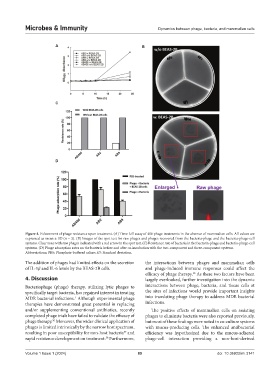
            Figure 4. Evlovement of phage resistance upon treatment. (A) Time-kill assay of 406 phage treatments in the absence of mammalian cells. All values are
            expressed as mean ± SD (n = 3). (B) Images of the spot test for raw phages and phages recovered from the bacteria-phage and the bacteria-phage-cell
            systems. Clear zone with raw phages indicated with a red arrow in the spot test. (C) Resistance rate of bacteria in the bacteria-phage and bacteria-phage-cell
            systems. (D) Phage adsorption rates on the bacteria before and after co-incubation with the two-component and three-component systems.
            Abbreviations: PBS: Phosphate-buffered saline; SD: Standard deviation.

            The addition of phages had limited effects on the secretion   the interactions between phages and mammalian cells
            of IL-1β and IL-6 levels by the BEAS-2B cells.     and phage-induced immune responses could affect the
                                                               efficacy of phage therapy.  As these two factors have been
                                                                                   36
            4. Discussion                                      largely overlooked, further investigation into the dynamic
            Bacteriophage (phage) therapy, utilizing lytic phages to   interactions between phage, bacteria, and tissue cells at
            specifically target bacteria, has regained interest in treating   the sites of infections would provide important insights
            MDR bacterial infections.  Although experimental phage   into translating phage therapy to address MDR bacterial
                                 1
            therapies have demonstrated great potential in replacing   infections.
            and/or supplementing conventional antibiotics, recently   The  positive  effects  of  mammalian  cells  on  assisting
            completed phage trials have failed to validate the efficacy of   phages to eliminate bacteria were also reported previously,
            phage therapy.  Moreover, the wider clinical application of   but most of these findings were noted in co-culture systems
                       36
            phages is limited intrinsically by the narrow host spectrum,   with mucus-producing cells. The enhanced antibacterial
            resulting in poor susceptibility for non-host bacteria  and   efficiency was hypothesized due to the mucus-adhered
                                                      37
            rapid resistance development on treatment.  Furthermore,   phage-cell interaction providing a non-host-derived
                                              38
            Volume 1 Issue 1 (2024)                         89                               doi: 10.36922/mi.3141

