


Page 123 - MI-2-4
P. 123
Microbes & Immunity                                      Isolation and identification of PEDV strain CHN-CQ-2021


            was observed in Vero cells at 8 hpi. Prolonged incubation   gene sequences of other reference strains retrieved from
            resulted in progressive expansion of the cytopathic area   GenBank. Sequence alignment and phylogenetic analysis
            and the emergence of cell detachment (Figure  3A).   were performed using the neighbor-joining method
            Analysis of the virus proliferation curve further revealed   to construct a phylogenetic tree, with bootstrap values
            that CHN-CQ-2021 reached its replication peak in Vero   applied to evaluate the reliability of the tree topology.  The
                                                                                                         28
            cells at 16 hpi (Figure 3B). These results demonstrate that   PEDV CHN-CQ-2021 strain was classified within the G2b
            the PEDV CHN-CQ-2021 strain can efficiently proliferate   subgroup and displayed the closest genetic relationship to
            in vitro.                                          strain GD-1 (GenBank: JX647847). In contrast, it exhibited
                                                               significant phylogenetic divergence from the G1-type
            3.3. Phylogenetic analysis of whole-genome and S
            genes of PEDV CHN-CQ-2021                          classical strain branch represented by CV777 (Figure 4).
                                                               These data suggested that the PEDV CHN-CQ-2021 strain
            To investigate the genetic evolution of the strain, the   was the most closely related to other PEDV strains from
            complete genome of PEDV CHN-CQ-2021 was amplified   mainland China.
            using RT-PCR and compared with the full genome and S
                                                               3.4. High pathogenicity of PEDV CHN-CQ-2021
                                                               strain in newborn piglets
                                                               To evaluate the pathogenicity of the PEDV CHN-CQ-2021
                                                               strain in piglets, newborn piglets were orally infected
                                                               with the CHN-CQ-2021 strain. Compared to the control
                                                               group, CHN-CQ-2021 strain-infected piglets exhibited
                                                               typical  clinical  symptoms,  including  severe  watery
                                                               diarrhea and dehydration (Figure  5). Importantly, all
                                                               CHN-CQ-2021 strain-infected newborn piglets died
                                                               within 4  days post-inoculation (Figure  6). Further
                                                               analysis of virus shedding and tissue tropism indicated
                                                               that, compared to the control group, CHN-CQ-2021
                                                               strain-infected newborn piglets shed virus at varying
                                                               levels during the 4-day observation period (Figure 7A),
                                                               while viral nucleic acids were detected in both intestinal
                                                               and brain tissues (Figure 7B). These results suggest that
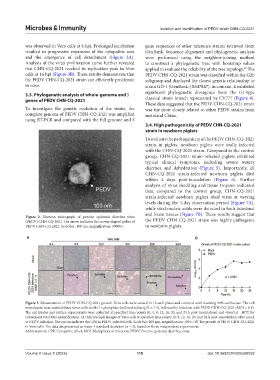
            Figure  2. Electron micrograph of porcine epidemic diarrhea virus
            (PEDV) CHN-CQ-2021. The arrow indicates the crown-shaped spikes of   the PEDV CHN-CQ-2021 strain was highly pathogenic
            PEDV CHN-CQ-2021. Scale bar: 100 nm, magnification: 30000×.  to newborn piglets.

            A                                                                       B


            Figure 3. Measurement of PEDV CHN-CQ-2021 growth. Vero cells were seeded in 12-well plates and cultured until reaching 90% confluence. The cell
            monolayers were washed three times with sterile 1× phosphate-buffered saline (pH = 7.4), followed by infection with PEDV CHN-CQ-2021 (MOI = 0.1).
            The cell lysates and culture supernatants were collected at specified time points (0, 4, 8, 12, 16, 20, and 24 h post-inoculation) and stored at −80°C for
            subsequent viral titer quantification. (A) Microscopic images of Vero cells at specified time points (4, 8, 12, 16, 20, and 24 h post-inoculation) after mock
            or PEDV infection. The arrows indicate the CPE in PEDV-infected cells. Scale bar: 200 μm, magnification: 100×. (B) The growth of PEDV CHN-CQ-2021
            in Vero cells. The data are presented as mean ± standard deviation (n = 3), based on three independent experiments.
            Abbreviations: CPE: Cytopathic effect; MOI: Multiplicity of infection; PEDV: Porcine epidemic diarrhea virus.


            Volume X Issue X (2025)                        115                           doi: 10.36922/MI025260059

