


Page 70 - MSAM-1-1
P. 70
Materials Science in Additive Manufacturing                                  Thixotropic metal 3D printing


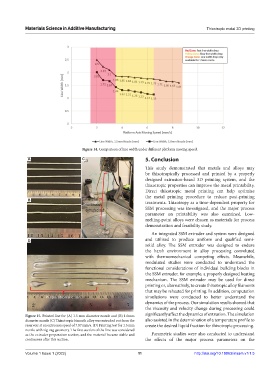
                                    Figure 14. Comparison of line width under different platform moving speed.

             A                      C                          5. Conclusion
                                                               This study demonstrated that metals and alloys may
                                                               be  thixotropically  processed  and  printed  by  a  properly
                                                               designed extrusion-based 3D printing system, and the
                                                               thixotropic properties can improve the metal printability.
                                                               Direct thixotropic metal printing can  help optimize
                                                               the metal printing procedure to reduce post-printing
             B
                                                               treatments. Thixotropy as a time-dependent property for
                                                               SSM processing was investigated, and the major process
                                                               parameter on printability was also examined. Low-
                                                               melting-point alloys were chosen as materials for process
                                                               demonstration and feasibility study.
                                                                 An integrated SSM extruder and system were designed
             D                                                 and utilized to produce uniform and qualified semi-
                                                               solid alloy. The SSM extruder was designed to endure
                                                               the harsh environment in alloy processing convoluted
                                                               with thermomechanical competing  effects. Meanwhile,
                                                               modulated  studies were conducted to  understand the
                                                               functional considerations of individual building blocks in
                                                               the SSM extruder, for example, a properly designed heating
                                                               mechanism. The SSM extruder may be used for direct
                                                               printing or, alternatively, to create thixotropic alloy filaments
                                                               that may be reheated for printing. In addition, computation
                                                               simulations were conducted  to  better  understand the
                                                               dynamics of the process. Our simulation results showed that
                                                               the viscosity and velocity change during processing could
            Figure 15. Printed line for (A) 1.5 mm diameter nozzle and (B) 1.0mm   significantly affect the dynamics of extrusion. The simulation
            diameter nozzle (C) Thixotropic bismuth alloy was extruded out from the   also assisted in the determination of a temperature profile to
            reservoir at an extrusion speed of 7.87 mm/s. (D) Printing test for 1.5 mm   create the desired liquid fraction for thixotropic processing.
            nozzle with zig-zag geometry. The first section of the line was considered
            as the extruder preparation section, and the material became stable and   Parametric studies were also conducted to understand
            continuous after this section.                     the effects of the major process parameters on the

            Volume 1 Issue 1 (2022)                         11                      http://doi.org/10.18063/msam.v1i1.5

