


Page 47 - MSAM-2-2
P. 47
Materials Science in Additive Manufacturing                          Biomimetic structures for optical focusing


            view (150°) and antireflection optical properties can be   Angel  in 1979, which was similar to the real lobster eye
                                                                    [11]
            manufactured by replicating the household fly compound   and was composed of a series of microchannel with dip
            eyes, which are composed of thousands of small eyes . The   angles arrayed on the surface of a sphere. Compared with
                                                     [6]
            eyes of dragonflies and flies mentioned above belong to the   “Schmidt” structure, “Angel” structure has higher optical
            superposition compound eyes, which have a higher light   focusing ability.
            energy utilization rate and higher sensitivity compared   The application of the bionic lobster eye structures
            with apposition compound eyes and have gradually   (BLES) with a wide field of view in the space all-sky
            become a research focus .                          monitors makes detecting high-energy rays more
                               [7]
              As another typical example of superposition compound   convenient [12-14] . ESA  installed “lobster ISS” equipment
                                                                                [15]
            eyes, lobster eyes converge light through the reflecting   inspired by the lobster eye on the zenith pointing external
            principle to obtain a brighter image in a deep water   platform of the ISS’s Columbus module to provide an
            environment . The lobster eye (Figure 1A) is composed   order-of-magnitude improvement in the sensitivity of
                      [8]
            of a matrix distributed of small eyes with square cross   all-sky monitors in the soft X-ray band (0.1–3.0 keV).
            sections, which have been described in detail in our   NASA  plans to apply “lobster eye” optics to locate
                                                                    [16]
            previous work . Based on the structural characteristics   the source of cosmic ripples. In the Gamma-Ray Burst
                        [9]
            of the lobster eye, a two-dimensional focus system, the   science mission, the Sino-French space-borne multiband
            “Schmidt”  structure , was  designed by  the orthogonal   astronomical variable objects monitor (SVOM) [17,18]
                            [10]
            superposition of two one-dimensional structures that were   will equip a bionic lobster eye optics device with square
            a set of flat reflecting surfaces arranged in a uniform radial   micropores. In addition to the applications in high-energy
            pattern around a cylinder perimeter. This spatial periodic   ray detection, the BLES with reflective focus characteristics
            structure can realize the reflection focus of high-energy   can also be used to make the new omnidirectional infrared
            rays.  In  addition,  an “Angel”  structure  was proposed  by   imaging device that have a wide field of view in the long

                         A                     B                          C


                         D                                     E


                         F


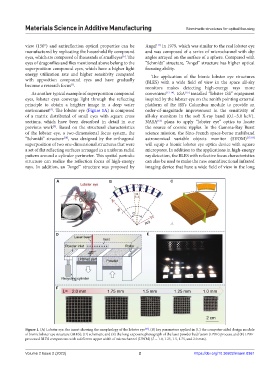
            Figure 1. (A) Lobster eye, the insert showing the morphology of the lobster eye ; (B) key parameters applied in (C) the computer-aided design module
                                                               [16]
            of bionic lobster eye structure (BLES); (D) schematic and (E) the long-exposure photograph of the laser powder bed fusion (LPBF) process; and (F) LPBF-
            processed BLES components with a different upper width of microchannel (UWM) (L = 1.0, 1.25, 1.5, 1.75, and 2.0 mm).

            Volume 2 Issue 2 (2023)                         2                       https://doi.org/10.36922/msam.0361

