


Page 51 - MSAM-2-2
P. 51
Materials Science in Additive Manufacturing                          Biomimetic structures for optical focusing


            the laser energy input was further increased, the excessive   molten pool incompletely melted, and adhered to the
            energy input increased the evaporation of volatile elements   formed part surface [39,40] .
            in the material, resulting in the increase of gas inside the   The  optical  focusing  performance  was  characterized
            melt, which further reduced the relative density of LPBF-  to study the focus ability of LPBF-processed BLES
                          [38]
            processed samples  (Figure 3C).                    samples with different UWM to collimate light sources.
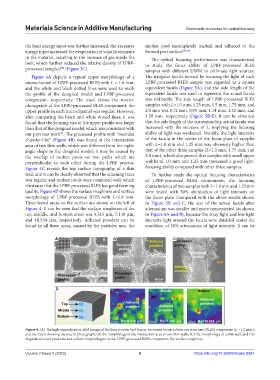
              Figure  4A depicts a typical upper morphology of a   The irregular facula formed by focusing the light of each
            microchannel of LPBF-processed BLES with L = 1.0 mm,   LPBF-processed BLES sample was regarded as a square
            and the white and black dotted lines were used to mark   equivalent facula (Figure 5A), and the side length of the
            the profile of the designed model and LPBF-processed   equivalent facula was used to represent the actual facula
            component, respectively. The inset shows the macro-  size indirectly. The side length of LPBF-processed BLES
            photograph of the LPBF-processed BLES component; the   samples with L=1.0 mm, 1.25 mm, 1.5 mm, 1.75 mm, and
            upper profile in each microchannel was regular. However,   2.0 mm was 0.72 mm, 0.95 mm, 1.14 mm, 1.32 mm, and
            after comparing the black and white dotted lines, it was   1.59  mm, respectively (Figure  5B-F). It can be obtained
            found that the forming size of the upper profile was larger   that the side length of the corresponding actual facula was
            than that of the designed model, which was consistent with   increased with the increase of  L, implying the focusing
            our previous work . The processed profile with “rounded   ability of light was weakened. Notably, the light intensity
                           [9]
            chamfer-like” (Figure  4B) was found at the intersection   of the facula in the center of the focus plate of samples
            area of two thin walls, which was different from the right-  with L=1.0 mm and 1.25 mm was obviously higher than
            angle shape in the designed model; it may be caused by   that of the other three samples (L=1.5 mm, 1.75 mm, and
            the overlap of molten pools on two paths which are   2.0 mm), which also proved that samples with small upper
            perpendicular to each other during the LPBF process.   widths of 1.0 mm and 1.25 mm possessed a good light-
            Figure  4C reveals the top surface topography of a thin   focusing ability compared with other three samples.
            wall, and it can be clearly observed that the scanning trace   To further study the optical focusing characteristics
            was regular and molten pools were combined well, which   of LPBF-processed BLES components, the focusing
            illustrates that the LPBF-processed BLES has good forming   characteristics of two samples with L=1.0 mm and 1.25 mm
            quality. Figure 4D shows the surface roughness and surface   were tested with 50% attenuation of light intensity on
            morphology of LPBF-processed BLES with  L=1.0  mm.   the focus plate. Compared with the above results shown
            Three tested areas on the surface are shown on the left of   in  Figure  5B  and C, the size of the actual facula after
            Figure 4. It can be seen that the surface roughness of the   attenuation was smaller and more concentrated (as shown
            top, middle, and bottom areas was 9.315 μm, 7.149 μm,   in Figure 6A and B), because the stray light and low light
            and 10.534  μm, respectively. Adhered  powders can be   intensity light around the facula were shielded under the
            found in all three areas, caused by the particles near the   condition of 50% attenuation of light intensity. It can be


                         A                       B                         C


                         D


            Figure 4. (A) The high-magnification SEM images of the laser powder bed fusion-processed bionic lobster eye structure (BLES) component (L = 1.0 mm),
            and the insert showing the macro-photograph, (B) the morphology of the intersection area of two thin walls, (C) the morphology of a thin wall, and (D)
            diagram of tested positions and surface morphologies on the LPBF-processed BLES component. Ra: surface roughness.


            Volume 2 Issue 2 (2023)                         6                       https://doi.org/10.36922/msam.0361

