


Page 53 - MSAM-2-2
P. 53
Materials Science in Additive Manufacturing                          Biomimetic structures for optical focusing


            the transmitted light, while the other part was contributed   angle between the incident light and the analysis surface
            by the reflected light. The light intensity of analysis surfaces   increased. Therefore, the maximum light intensity on
            on D1 to D3 increased from the top to the bottom since   D1–D3  increased  gradually, which was  0.0475  W/m ,
                                                                                                            2
            the reflection numbers of light in the conical microchannel   0.1235 W/m , and 0.209 W/m , respectively. For the same
                                                                                       2
                                                                         2
            from top to bottom increased. When the microchannel was   reason, the light intensity on the analysis surface (D4 and
            away from the center of BLES (optic axis), the reflection   D5) also increased from top to bottom, and the maximum
            numbers of incident light in the microchannel rose as the   light intensity on D5 (0.437 W/m ) was greater than that on
                                                                                         2
                                                               D4 (0.228 W/m ). It was worth noting that there were “zero
                                                                           2
            A                      B                           intensity regions” in both D4 and D5, which was due to the
                                                               absence of the transmitted light and reflected light in those
                                                               regions. In addition, the light intensity in the region below
                                                               “zero intensity regions” of D5 was completely contributed
                                                               by the reflected light. As shown in Figure 8C, the analytical
                                                               surfaces of U1 to U5 are the opposite surfaces corresponding
                                                               to D1 to D5, respectively, where the inclination angle of
                                                               U1 was −0.5α, and inclination increased gradually from
            C                      D                           U1 to U5 at α increments. The light intensity distribution
                                                               of U1 (Figure 8D) was similar to D1 (Figure 8B) because
                                                               both analysis surfaces were symmetric about the center of
                                                               BLES and had the same light condition. Because analysis
                                                               surfaces of U2 to U5 could not receive the transmitted
                                                               light, the light intensity was contributed by the reflected
                                                               light on each analysis surface (Figure 8D). Notably, there
                                                               was no light intensity on the analysis surface of U2, which
                                                               indicated that transmitted light and reflected light were not
                                                               incident to U2. The maximum light intensity was increased
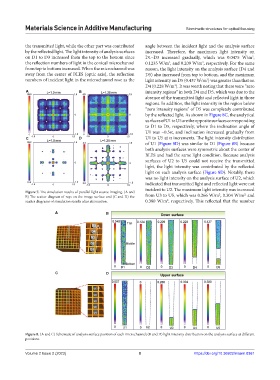
            Figure 7. The simulation results of parallel light source imaging. (A and         2          2,
            B) The scatter diagram of rays on the image surface and (C and D) the   from U3 to U5, which was 0.266 W/m , 0.304 W/m  and
                                                                        2
            scatter diagrams of simulation results after attenuation.  0.380 W/m , respectively. This reflected that the number
                         A                    B


                         C                    D


            Figure 8. (A and C) Schematic of analysis surface position of each microchannel; (B and D) light intensity distribution on the analysis surface at different
            positions.


            Volume 2 Issue 2 (2023)                         8                       https://doi.org/10.36922/msam.0361

