


Page 50 - MSAM-2-2
P. 50
Materials Science in Additive Manufacturing                          Biomimetic structures for optical focusing


            at the position of R from the coordinate origin, followed   16  m
            by the analysis surface with a size of 6 mm × 5 mm placed      15  KT                        (II)
            at the position of  R/2 from the coordinate origin. The         B
            surface characteristic of the CAD model was set to perfect   Where  m is the atomic mass,  K  is the Boltzmann
                                                                                             B
            reflection.                                        constant,  and  γ is  the  surface  tension  of  the  melt.  The
            3. Results and discussion                          surface tension of the melt γ could be calculated employing
                                                               the following equation :
                                                                                 [35]
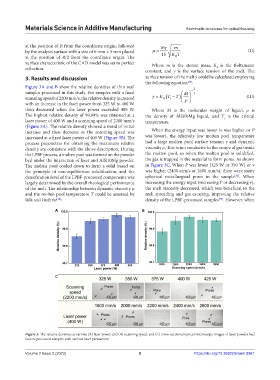
            Figure 3A and B show the relative densities of thin wall               2

            samples processed in this study. For samples with a fixed          M   3
                                                                            T
            scanning speed of 2200 mm/s, the relative density increased     K B T c             (III)
            with an increase in the laser power from 325 W to 400 W,
            then  decreased when  the  laser  power  exceeded  400 W.   Where  M is the molecular weight of liquid,  ρ is
            The highest relative density of 99.98% was obtained at a   the density of AlSi10Mg liquid, and  T  is the critical
            laser power of 400 W and a scanning speed of 2200 mm/s   temperature.               c
            (Figure 3A). The relative density showed a trend of initial
            increase and then decrease as the scanning speed was   When the energy input was lower (v was higher or P
            increased at a fixed laser power of 400 W (Figure 3B). The   was lower), the relatively low molten pool temperature
            process parameters for obtaining the maximum relative   had a large molten pool surface tension  γ and dynamic
            density are consistent with the above description. During   viscosity μ. This is not conducive to the escape of gas inside
            the LPBF process, a molten pool was formed on the powder   the molten  pool, so when  the molten pool is solidified,
            bed under the interaction of laser and AlSi10Mg powder.   the gas is trapped in the material to form pores. As shown
            The molten pool cooled down to form a solid based on   in Figure 3C, When P was lower (325 W or 350 W) or v
            the principle of non-equilibrium solidification, and the   was higher (2400 mm/s or 2600 mm/s), there were many
                                                                                                     [36]
            densification level of the LPBF-processed components was   spherical metallurgical pores in the sample . When
            largely determined by the overall rheological performance   increasing the energy input (increasing P or decreasing v),
            of the melt. The relationship between dynamic viscosity μ   the melt viscosity decreased, which was beneficial to the
            and the molten pool temperature T could be assessed by   melt spreading and gas escaping, improving the relative
            Iida and Guthrie :                                 density of the LPBF-processed samples . However, when
                                                                                              [37]
                         [34]
                         A                                   B


                         C


            Figure 3. The relative densities at various (A) laser power and (B) scanning speed, and (C) cross-sectional optical microscopy images of laser powder bed
            fusion-processed samples with various laser parameters.


            Volume 2 Issue 2 (2023)                         5                       https://doi.org/10.36922/msam.0361

