


Page 9 - MSAM-3-3
P. 9
Materials Science in Additive Manufacturing                        Multi-material Ti6Al4V-B4C through L-DED


            A                      B                           a rapid turn lathe unit. The diameter was reduced until
                                                               a cemented carbide-cutting insert removed the rough
                                                               as-printed exterior. Subsequently, the sample was turned
                                                               to height using a parting tool to remove both ends of the
                                                               cylinder based on a height-to-diameter ratio of 1.5 – 2 with
                                                               the end sample appearance in Figure 1C. Turning of the
                                                               Ti64 cylinders was performed swiftly without damaging
                                                               the cutting insert, whereas the treated samples were cut
                                                               slowly with higher RPM, lower cut depths, and slower feed
            C                      D                           speeds.

                                                               2.2. Microstructural characterization and phase
                                                               analysis

                                                               A low-speed diamond saw was used to cut an
                                                               unmachined sample into three sections to characterize
                                                               its microstructure. The top of the cylinder was sectioned
                                                               first in the build plane, as seen in Figure 1D; the rest was
                                                               cut along the axis. Thus, the sample’s circular and side
            E                 F                                cross-sections were exposed. All three sample sections
                                                               were then mounted into one phenolic resin, ground
                                                               sequentially using 80 – 1200 SiC grit-size grinding papers,
                                                               and polished with alumina particles (of decreasing particle
                                                               size, i.e., 1 – 0.05 µm) dispersed in deionized water. Kroll’s
                                                               reagent was used to etch the samples by dipping them in
                                                               the etchant for 30 s and washing them off using deionized
                                                               water. The microstructures were acquired using a Keyance
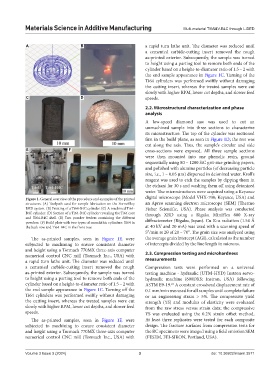
            Figure 1. General overview of the procedure and examples of the printed   digital microscope (Model VHX-700; Keyance, USA) and
            structures. (A) Toolpath used for sample fabrication on the FormAlloy   an Apreo scanning electron microscope (SEM) (Thermo
            DED system. (B) Printing of a Ti64-B4C cylinder. (C) A machined Ti64-  Fisher Scientific, USA). Phase analysis was conducted
            B4C cylinder. (D) Section of a Ti64-B4C cylinder revealing the Ti64 core   through XRD using a Rigaku MiniFlex 600 X-ray
            and Ti64-B4C shell. (E) Two powder feeders containing the different
            powders. (F) Build plate with two types of monolithic cylinders: Ti64 in   diffractometer (Rigaku, Japan). Cu K-α radiation (1.54 Å
            the back row and Ti64-B4C in the front row.        at 40 kV and 20 mA) was used with a scanning speed of
                                                               5°/min at 2θ of 20 – 70°. The grain size was analyzed using
              The as-printed samples, seen in  Figure  1F, were   the average grain intercept (AGI), calculated as the number
            subjected to  machining to  ensure  consistent  diameter   of intercepts divided by the line length in microns.
            and height using a Tormach 770MX three-axis computer
            numerical control CNC mill (Tormach Inc., USA) with   2.3. Compression testing and microhardness
            a rapid turn lathe unit. The diameter was reduced until   measurements
            a cemented carbide-cutting insert removed the rough   Compression tests were performed on a universal
            as-printed exterior. Subsequently, the sample was turned   testing machine - hydraulic (UTM-HYD) Instron servo-
            to height using a parting tool to remove both ends of the   hydraulic machine (600DXS; Instron, USA) following
            cylinder based on a height-to-diameter ratio of 1.5 – 2 with   ASTM E9-19.  A constant crosshead displacement rate of
                                                                          21
            the end sample appearance in Figure 1C. Turning off the   0.1 mm/min was used for all samples until complete failure
            Ti64 cylinders was performed swiftly without damaging   or an engineering strain > 5%. The compressive yield
            the cutting insert, whereas the treated samples were cut   strength (YS) and modulus of elasticity were evaluated
            slowly with higher RPM, lower cut depths, and slower feed   from the raw stress versus strain data; the compressive
            speeds.                                            YS was evaluated using the 0.2% strain offset method.
              The as-printed samples, seen in  Figure  1F, were   At least three replicates were tested for each composite
            subjected to  machining to  ensure  consistent  diameter   design. The fracture surfaces from compression tests for
            and height using a Tormach 770MX three-axis computer   the RC specimens were imaged using a field emission SEM
            numerical control CNC mill (Tormach Inc., USA) with   (FESEM, FEI-SIRON, Portland, USA).


            Volume 3 Issue 3 (2024)                         3                              doi: 10.36922/msam.3571

