


Page 18 - OR-1-3
P. 18
3.6. Bibliometric analysis of keywords            signaling a shift toward practical applications of organoids
                                                              in tissue engineering and regenerative medicine.
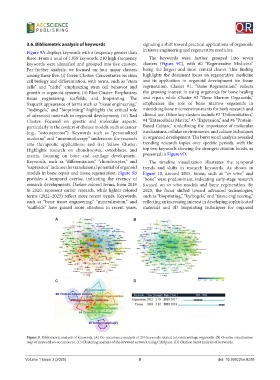
            Figure 9A displays keywords with a frequency greater than
            three. From a total of 1,859 keywords, 210 high-frequency   The keywords were further grouped into seven
            keywords were identified and grouped into five clusters.   clusters (Figure  9C), with #0  “Regenerative Medicine”
            For  further  analysis,  we  focused on  four  major  clusters   being the largest and most central cluster. This finding
            among these five: (i) Green Cluster: Concentrates on stem   highlights the dominant focus on regenerative medicine
            cell biology and differentiation, with terms, such as “stem   and its application in organoid development for tissue
            cells” and “niche” emphasizing stem cell behavior and   regeneration. Cluster #1, “Bone Regeneration,” reflects
            growth in organoid systems; (ii) Blue Cluster: Emphasizes   the growing interest in using organoids for bone healing
            tissue engineering, scaffolds, and bioprinting. The   and repair, while Cluster #2 “Bone Marrow Organoids,”
            frequent appearance of terms such as “tissue engineering,”   emphasizes the role of bone marrow organoids in
            “hydrogels,” and “bioprinting” highlights the critical role   mimicking bone microenvironments for both research and
            of advanced materials in organoid development; (iii) Red   clinical use. Other key clusters include #3 “Differentiation,”
            Cluster: Focused on genetic and molecular aspects,   #4 “Extracellular Matrix,” #5 “Expression,” and #6 “Protein-
            particularly in the context of disease models, such as cancer   Based Culture,” underlining the importance of molecular
            (e.g., “osteosarcoma”). Keywords such as “personalized   mechanisms, cellular environments, and culture techniques
            medicine” and “immunotherapy” underscore the research   in organoid development. The burst word analysis revealed
            into  therapeutic applications; and  (iv) Yellow Cluster:   trending research topics over specific periods, with the
            Highlights  research  on  chondrocytes,  osteoblasts,  and   top two keywords showing the strongest citation bursts, as
            matrix, focusing on bone and cartilage development.   presented in Figure 9D.
            Keywords, such as “differentiation,” “chondrocytes,” and   The timeline visualization illustrates the temporal
            “expression” indicate the translational potential of organoid   trends and shifts in research keywords. As shown in
            models in bone repair and tissue regeneration. Figure 9B   Figure  10, around 2015, terms, such as “in vitro” and
            provides a temporal overlay, indicating the recency of   “bone” were predominant, indicating early-stage research
            research developments. Darker-colored terms, from 2019   focused on  in vitro models and bone regeneration. By
            to 2020, represent earlier research, while lighter-colored   2020,  the focus shifted toward  advanced  technologies,
            terms (2022–2023) reflect more recent trends. Keywords,   such as “bioprinting,” “hydrogels,” and “tissue engineering,”
            such as “bone tissue engineering,” “mineralization,” and   reflecting an increasing interest in developing sophisticated
            “scaffolds” have gained more attention in recent years,   materials and 3D bioprinting techniques for organoid


                         A                                B


                         C                                D


            Figure 9. Bibliometric analysis of keywords. (A) Co-occurrence analysis of 210 keywords related to bone/cartilage organoids. (B) Overlay visualization
            map of keyword co-occurrences. (C) Clustering analysis of the keyword network using CiteSpace. (D) Citation burst analysis of keywords.


            Volume 1 Issue 3 (2025)                         9                                 doi: 10.36922/or.8295

