


Page 16 - OR-1-3
P. 16
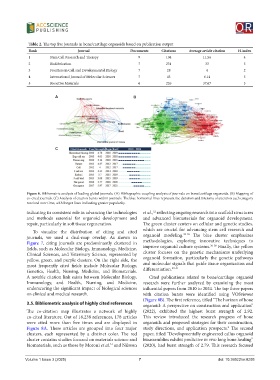
Table 2. The top five journals in bone/cartilage organoids based on publication output
             Rank                 Journal               Documents     Citations  Average article citation  H‑index
             1        Stem Cell Research and Therapy        9           104            11.56             4
             2        Biofabrication                        7           231             33               5
             3        Frontiers in Cell and Developmental Biology  7    28               4               2
             4        International Journal of Molecular Sciences  7    43              6.14             5
             5        Bioactive Materials                   6           226            37.67             5

                         A                                B


                         C


            Figure 6. Bibliometric analysis of leading global journals. (A) Bibliographic coupling analysis of journals on bone/cartilage organoids. (B) Mapping of
            co-cited journals. (C) Analysis of citation bursts within journals. The blue horizontal lines represent the duration and intensity of attention each category
            received over time, with longer lines indicating greater popularity.

            indicating its consistent role in advancing the technologies   et al.,  reflecting ongoing research into scaffold structures
                                                                  32
            and  methods  essential for  organoid  development  and   and advanced biomaterials for organoid development.
            repair, particularly in soft tissue regeneration.  The green cluster centers on cellular and genetic studies,
               To visualize the distribution of citing and cited   which are crucial for advancing stem cell research and
            journals, we used a dual-map overlay. As shown in   organoid modeling. 33-35  The blue cluster emphasizes
            Figure  7, citing journals are predominantly clustered in   methodologies, exploring innovative techniques to
                                                                                          36-38
            fields, such as Molecular Biology, Immunology, Medicine,   improve organoid culture systems.   Finally, the yellow
            Clinical Sciences, and Veterinary Science, represented by   cluster focuses on the genetic mechanisms underlying
            yellow, green, and purple clusters. On the right side, the   organoid  formation,  particularly  the  genetic  pathways
            most  frequently  cited  fields include Molecular  Biology,   and molecular signals that guide tissue organization and
                                                                          39-41
            Genetics,  Health,  Nursing,  Medicine,  and  Biomaterials.   differentiation.
            A notable citation link exists between Molecular Biology,   Cited publications related to bone/cartilage organoid
            Immunology, and Health, Nursing, and Medicine,    research  were  further  analyzed  by  examining  the  most
            underscoring the significant impact of biological sciences   influential papers from 2010 to 2024. The top three papers
            on clinical and medical research.                 with citation bursts were identified using VOSviewer
                                                              (Figure 8B). The first reference, titled “The horizon of bone
            3.5. Bibliometric analysis of highly cited references  organoid: A perspective on construction and application”
            The co-citation map illustrates a network of highly   (2022), exhibited the highest burst strength of 2.92.
            co-cited literature. Out of 18,238 references, 178 articles   This review introduced the research progress of bone
            were cited more than five times and are displayed in   organoids and proposed strategies for their construction,
            Figure  8A. These  articles  are grouped  into four  major   study directions, and application prospects.  The second
                                                                                                  9
            clusters, each represented by a distinct color. The red   paper, titled “Developmentally engineered callus organoid
            cluster contains studies focused on materials science and   bioassemblies exhibit predictive in vivo long bone healing”
            biomaterials, such as those by Moroni et al.  and Nilsson   (2020), had burst strength of 2.79. This research focused
                                                31

            Volume 1 Issue 3 (2025)                         7                                 doi: 10.36922/or.8295

