


Page 44 - OR-1-3
P. 44
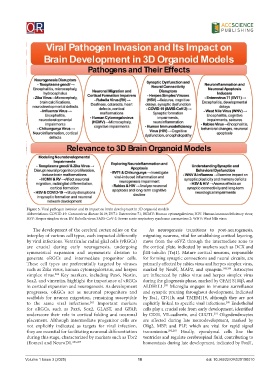
Figure 5. Viral pathogen invasion and its impact on brain development in 3D organoid models
            Abbreviations: COVID-19: Coronavirus disease 2019; EV71: Enterovirus 71; HCMV: Human cytomegalovirus; HIV: Human immunodeficiency virus;
            HSV: Herpes simplex virus; RV: Rubella virus; SARS-CoV-2: Severe acute respiratory syndrome coronavirus 2; WNV: West Nile virus.

               The development of the cerebral cortex relies on the   As neurogenesis transitions to post-neurogenesis,
            interplay of various cell types, each impacted differently   migrating neurons, vital for establishing cortical layering,
            by viral infections. Ventricular radial glial cells (vRGCs)   move from the oSVZ through the intermediate zone to
            are crucial during early neurogenesis, undergoing   the cortical plate, indicated by markers such as DCX and
            symmetrical expansion and asymmetric division to   βIII-tubulin (Tuj1). Mature cortical neurons, responsible
            generate oRGCs and intermediate progenitor cells.   for forming synaptic connections and neural circuits, are
            These cell types are preferentially targeted by viruses   primarily affected by rabies virus and herpes simplex virus,
            such as Zika virus, human cytomegalovirus, and herpes   marked by NeuN, MAP2, and synapsin. 288,289  Astrocytes
            simplex  virus.   Key  markers,  including  Pax6,  Nestin,   are influenced by rabies virus and herpes simplex virus
                        284
            Sox2, and vimentin, highlight the importance of vRGCs   during the gliogenesis phase, marked by GFAP, S100β, and
            in cortical expansion and neurogenesis. As development   ALDH1L1.  Microglia engages in immune surveillance
                                                                       289
            progresses, oRGCs act as neuronal progenitors and   and synaptic pruning throughout development, indicated
            scaffolds  for  neuron  migration,  remaining  susceptible   by Iba1, CD11b, and TMEM119, although they are not
            to the same viral infections.  Important markers   explicitly linked to specific viral infections.  Endothelial
                                       285
                                                                                                 290
            for oRGCs, such as Pax6, Sox2, GLAST, and GFAP,   cells play a crucial role from early development, identified
            underscore their role in cortical folding and neuronal   by CD31, VE-cadherin, and GLUT1.  Oligodendrocytes
                                                                                            291
            placement. Although intermediate progenitor cells are   are affected during late neurodevelopment, marked by
            not explicitly indicated as targets for viral infection,   Olig2, MBP, and PLP, which are vital for rapid signal
            they are essential for facilitating neuronal differentiation   transmission. 292,293  Finally, ependymal cells line the
            during this stage, characterized by markers such as Tbr2   ventricles and regulate cerebrospinal fluid, contributing to
            (Eomes) and NeuroD1. 286,287                      homeostasis during late development, indicated by FoxJ1,


            Volume 1 Issue 3 (2025)                         18                           doi: 10.36922/OR025100010

