


Page 40 - OR-1-3
P. 40
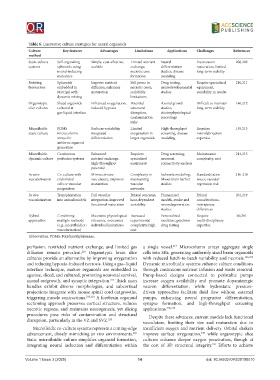
Table 6. Innovative culture strategies for neural organoids
             Culture        Key features    Advantages    Limitations   Applications  Challenges    References
             method
             Static culture   Self-organizing   Simple, cost-effective,   Limited nutrient   Neural   Inconsistent   208,209
             systems     spheroids using   scalable      exchange,   differentiation   maturation, limited
                         neural-inducing                 necrotic core   studies, disease   long-term viability
                         molecules                       formation   modeling
             Rotating    Spheroids      Improve nutrient   Still prone to   Drug testing,   Require specialized   210,211
             bioreactors  embedded in   diffusion, enhances   necrotic cores,   neurodevelopmental   equipment,
                         Matrigel with   maturation      scalability   studies       variability in results
                         dynamic mixing                  limitations
             Organotypic   Sliced organoids   Enhanced oxygenation,  Potential   Axonal growth   Difficult to maintain   146,212
             slice cultures  cultured at   reduced hypoxia  structural   studies,    long-term viability
                         gas-liquid interface            disruption,   electrophysiological
                                                         contamination   recordings
                                                         risks
             Microfluidic   PDMS        Reduces variability,   Limited   High-throughput   Requires   135,213
             static culture  microcolumn   integrated    oxygenation in   screening, disease   microfabrication
                         arrays for     differentiation  larger organoids  modeling  expertise
                         uniform organoid
                         generation
             Microfluidic   Continuous   Enhanced        Requires    Drug screening,   Maintenance   214,215
             dynamic culture  perfusion systems  nutrient exchange,   specialized   neuronal   complexity, cost
                                        high-throughput   equipment  connectivity analysis
                                        potential
             In vitro    Co-culture with   Mimics in vivo   Complexity in   Ischemia modeling,   Standardization   216-218
             vascularization  endothelial   vasculature, improves   maintaining   blood-brain barrier   issues, vascular
                         cells or vascular   maturation  vascular    studies         regression risk
                         progenitors                     networks
             In vivo     Transplantation   Full vascular   Ethical concerns,   Humanized   Ethical   201,219
             vascularization  into animal models  integration, improved   host-dependent   models, stroke and   considerations,
                                        functional maturation  variability  neurodegeneration   interspecies
                                                                     studies         differences
             Hybrid      Combining      Maximize physiological  Increased   Personalized   Require    60,201
             approaches  multiple methods   relevance, overcomes   experimental   medicine, precision   multi-disciplinary
                         (e.g., microfluidics+  individual limitations  complexity, high   drug testing  expertise
                         vascularization)                cost
             Abbreviation: PDMS: Polydimethylsiloxane.

            perfusion, restricted nutrient exchange, and limited gas   a single vessel.  Microcolumn arrays aggregate single
                                                                           217
            diffusion remain prevalent.  Organotypic brain slice   cells into EBs, generating uniformly sized brain organoids
                                    210
            cultures provide an alternative by improving oxygenation   with reduced batch-to-batch variability and necrosis. 135,227
            and reducing hypoxia-induced necrosis. Using a gas–liquid   Dynamic microfluidic systems enhance culture conditions
            interface technique, mature organoids are embedded in   through continuous nutrient infusion and waste removal.
            agarose, sliced, and cultured, promoting neuronal survival,   Pump-based designs connected to peristaltic pumps
            axonal outgrowth, and synaptic integration.  Thick axon   increase  oxygen  availability  and  promote  dopaminergic
                                                222
            bundles exhibit diverse morphologies, and subcortical   neuron differentiation, while  hydrostatic pressure-
            projections integrate with mouse spinal cord outgrowths,   driven approaches facilitate fluid flow without external
            triggering muscle contractions. 223,224  A forebrain organoid   pumps, enhancing neural progenitor differentiation,
            sectioning approach preserves cortical structure, reduces   synapse formation, and high-throughput screening
            necrotic regions, and maintains neurogenesis, yet slicing   applications. 228,229
            procedures pose risks of contamination and structural   Despite these advances, current models lack functional
            disruption, particularly in the VZ and SVZ. 225   vasculature, limiting their size and maturation due to
               Microfluidic co-culture systems represent a cutting-edge   insufficient oxygen and nutrient delivery. Orbital shakers
            advancement, closely mimicking in vivo environments.    improve  surface  oxygenation,  while  organotypic slice
                                                                                       230
                                                          226
            Static microfluidic culture simplifies organoid formation,   cultures enhance deeper oxygen penetration, though at
            integrating  neural  induction  and  differentiation  within   the cost of 3D structural integrity.  Efforts to achieve
                                                                                           231
            Volume 1 Issue 3 (2025)                         14                           doi: 10.36922/OR025100010

