


Page 62 - TD-3-3
P. 62
Tumor Discovery                                            Pyroptosis-related genes in breast cancer progression


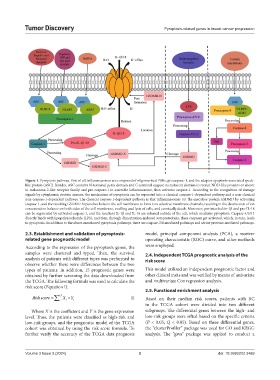
            Figure 1. Pyroptosis pathway. First of all, inflammasomes are composed of oligomerized PRRs, procaspase-1, and the adaptor apoptosis-associated speck-
            like protein (ASC). Besides, ASC contains N-terminal pyrin domain and C-terminal caspase recruitment domain to recruit NOD-like proteins or absent
            in melanoma 2-like receptor family and pro-caspase-1 to assemble inflammasome, then activates caspase-1. According to the recognition of damage
            signals by cytoplasmic protein sensors, the mechanism of pyroptosis can be separated into a classical caspase-1-dependent pathway and a non-classical
            non-caspase-1-dependent pathway. The classical caspase-1-dependent pathway is that inflammasomes cut the executive protein GSDMD by activating
            caspase-1, and the resulting GSDMD-N punches holes in the cell membrane to form non-selective membrane channels, resulting in the destruction of ion
            concentration balance on both sides of the cell membrane, swelling and lysis of cells, and eventually death. Moreover, pro-interleukin-1β and pro-IL-18
            can be segmented by activated caspase-1, and the resultant IL-1β and IL-18 are released outside of the cell, which mediates pyroptosis. Caspase-4/5/11
            directly binds with lipopolysaccharide (LPS), and then, through dimerization-induced autoproteolysis, these caspases get activated, which, in turn, leads
            to pyroptosis. In addition to the above-mentioned pyroptosis pathways, there are caspase-3/8-mediated pathways and serine protease-mediated pathways.

            2.3. Establishment and validation of pyroptosis-   model, principal component analysis (PCA), a receiver
            related gene prognostic model                      operating characteristic (ROC) curve, and other methods
            According to the expression of the pyroptosis genes, the   were employed.
            samples  were  clustered  and  typed.  Then,  the  survival   2.4. Independent TCGA prognostic analysis of the
            analysis of patients with different types was performed to   risk score
            observe whether there were differences between the two
            types of patients. In addition, 15 prognostic genes were   This model utilized an independent prognostic factor and
            obtained by further screening the data downloaded from   other clinical traits and was verified by means of univariate
            the TCGA. The following formula was used to calculate the   and multivariate Cox regression analysis.
            risk score (Equation I):
                                                               2.5. Functional enrichment analysis
                          i ∑
               Riskscore =  15 X × Y i                   I)    Based on their median risk scores, patients with BC
                             i
                                                               in the TCGA cohort were divided into two different
              Where X is the coefficient and Y is the gene expression   subgroups. The differential genes between the high- and
            level. Thus, the patients were classified as high-risk and   low-risk groups were sifted based on the specific criteria
            low-risk groups, and the prognostic model of the TCGA   (P < 0.05;  Q < 0.05). Based on these differential genes,
            cohort was obtained by using the risk score formula. To   the “clusterProfiler” package was used for GO and KEGG
            further verify the accuracy of the TCGA data prognosis   analysis. The “gsva” package was applied to conduct a


            Volume 3 Issue 3 (2024)                         3                                 doi: 10.36922/td.3469

