


Page 71 - TD-3-3
P. 71
Tumor Discovery                                            Pyroptosis-related genes in breast cancer progression


                                                                                                            27
             A                                                 present study are significantly associated with mitosis.
                                                               Thus, they may point to additional pathways for BC
                                                               progression. The down-regulation of RGS1 may be closely
                                                               related to DNA methylation-dependent silencing or
                                                               immune escape. The  RGS1, a member of the G protein
                                                               signal transduction family, is an important tumor immune
                         C                                     escape site.  Due to RGS1 being down-regulated in this
                                                                        28
                                                               analysis, a joint study of BC and immune pathways may be
                                                               carried out in the future.

                                                                 The PSME2 might be a significant oncogene or tumor
                                                               suppressor  gene  for  the  prevention  or  early  diagnosis
                                                               of BC.  PSME2, which plays the role of an oncogene or
                                                               tumor suppressor  gene  through  multiple  pathways  in
                                                               BC, endometrial cancer, and other malignant tumors,
                                                               is implicated in immunoproteasome assembly and is
            B                                                  required for efficient antigen processing. In this study,
                                                               PSME2 was down-regulated in BC, indicating that the
                                                               diagnosis  and  recurrence  of  BC  may  be  related  to  its
                                                               misregulation.
                                                                 In the risk model, several genes related to BC have not
                                                               yet been extensively studied or have unclear pathways,
                                                               including  PXDNL,  ARMH1,  and  APOBEC3F.  First,
                                                               up-regulated  PXDNL, a member of the peroxidase gene
                                                               family, has been identified as a potential independent
                                                               prognostic biomarker for BC, and it appears to be
                                                               associated with reduced OS and recurrence-free survival
                                                               rates.  Second,  ARMH1, also known as C1orf228, has
                                                                   29
                                                               been investigated in only three studies, with its relevance
                                                               primarily noted in oral squamous cell carcinoma.
                                                               Unfortunately, its pathway in BC remains unclear. Finally,
                                                               APOBEC3D and APOBEC3F, which are pseudogenes, have
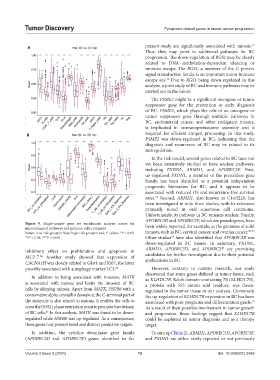
            Figure  9. Single-sample gene set enrichment analysis scores for   been widely reported, for example, as the genomes of solid
            immunological pathways and immune cells compared
            Notes: Low-risk group in blue; high-risk group in red; P-values: *P < 0.05;   tumors, such as BC, cervical cancer, and ovarian cancer. 30-33
                                                                          34
            **P < 0.01; ***P < 0.001.                          Other studies  have also identified that APOBEC3B was
                                                               down-regulated in BC tissues. In summary,  PXDNL,
            inhibitory effect on proliferation and apoptosis in   ARMH1,  APOBEC3D, and  APOBEC3F are promising
            MCF-7.  Another study showed that expression of    candidates for further investigation due to their potential
                  24
                                                               applications in BC.
            CACNA1H was closely related to Glut1 and Ki67, the latter
            possibly associated with autophagy marker LC3. 25    However, contrary to current research, our study
                                                               discovered that some genes differed in tumor tissue, such
              In addition to being associated with invasion,  MATK   as KLHDC7B. Kelch domain-containing 7B (KLHDC7B),
            is associated with mitosis and limits the invasion of BC   a protein with 595 amino acid residues, was down-
            cells by delaying mitosis. Apart from MATK, HSPB8 with a   regulated in the tumor tissue in our analysis. Conversely,
            conservative alpha-crystallin domain at the C-terminal part of   the up-regulation of KLHDC7B expression in BC has been
            the molecule is also related to mitosis. It enables the cells to   associated with poor prognosis and differentiation grade.
                                                                                                            35
            cross the G0/G1 phase restriction point to promote the division   As a result of their possible involvement in tumor growth
                    26
            of BC cells.  In this analysis, MATK was found to be down-  and progression, these findings suggest that  KLHDC7B
            regulated while HSPB8 was up-regulated. As a consequence,   could be exploited in tumor diagnosis and as a therapy
            these genes may present novel and distinct prediction targets.  target.

              In addition, the cytidine deaminase gene family    To sum up (Table 2), ARMH1, APOBEC3D, APOBEC3F,
            (APOBEC3D and  APOBEC3F) genes identified in the   and PXDNL are either rarely reported or not previously


            Volume 3 Issue 3 (2024)                         12                                doi: 10.36922/td.3469

