


Page 164 - TD-3-4
P. 164
Tumor Discovery                                                 CK2 deregulation in non-small-cell lung cancer


                        A                                    B


                        C                                     D


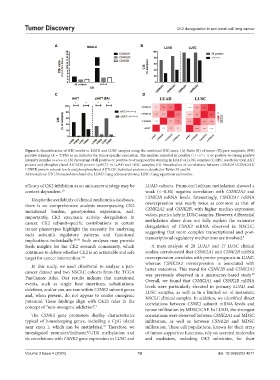
            Figure 6. Quantification of IHC results in LUAD and LUSC samples using the combined IHC score. (A) Ratio (R) of tumor (T)/para-neoplastic (PN)
            positive staining (R = T/PN) as an indicator for tumor-specific association. The analysis included all positive (+/++/+++) or positive-to-strong positive
            intensity samples (++/+++); (B) Percentage of all positive or positive-to-strong positive staining in LUAD or LUSC samples; (C) IHC results for total AKT
            protein and phosphorylated AKTs129 protein (pAKT) in LUAD and LUSC samples; (D) Visualization of correlations between CSNK2A1/CSNK2A2/
            CSNKB protein subunit levels and phosphorylated AKTs129. Statistical analysis is detailed in Tables S3 and S4.
            Abbreviations: IHC: Immunohistochemistry; LUAD: Lung adenocarcinoma; LUSC: Lung squamous carcinoma.
            efficacy of CK2 inhibition as an anticancer strategy may be   LUAD cohorts. Promoter/1stExon methylation showed a
            context-dependent. 13                              weak (<−0.30) negative correlation with  CSNK2A2 and
              Despite the availability of clinical multiomics databases,   CSNK2B  mRNA  levels.  Interestingly,  CSNK2A1  mRNA
            there is no comprehensive analysis encompassing CK2   overexpression was nearly twice as common as that of
            mutational burden,  gene/protein  expression, and,   CSNK2A2 and  CSNK2B, with higher median expression
                                                               values, particularly in LUSC samples. However, differential
            importantly, CK2 enzymatic activity deregulation in
            cancer.  CK2  subunit-specific  contributions  to  certain   methylation alone does not fully explain the extensive
            tumor phenotypes highlight the necessity for analyzing   deregulation of  CSNK2 mRNA observed in NSCLC,
                                                               suggesting that more complex transcriptional and post-
            each  subunit’s  regulatory  patterns  and  functional                                      3
            implications individually. 28-30  Such analyses may provide   transcriptional regulatory mechanisms are involved.
            fresh  insights  for  the  CK2  research  community,  which   A meta-analysis of 20 LUAD and 17 LUSC clinical
            continues to debate whether CK2 is an actionable and safe   studies corroborated that CSNK2A1 and CSNK2B mRNA
            target for cancer intervention. 6,8                overexpression correlates with poorer prognosis in LUAD,
                                                               whereas  CSNK2A2 overexpression is associated with
              In this study, we used cBioPortal to analyze a pan-
            cancer dataset and two NSCLC cohorts from the TCGA   better outcomes. This trend for  CSNK2B and  CSNK2A2
                                                               was previously observed in a microarray-based study.
                                                                                                            26
            PanCancer Atlas. Our results indicate that mutational   Overall, we found that  CSNK2A1 and  CSNK2B mRNA
            events,  such  as single base insertions,  substitutions,   levels were particularly elevated in primary LUAD and
            deletions, and/or can, are rare within CSNK2 subunit genes   LUSC samples, as well as in a limited set of metastatic
            and, when present, do not appear to confer oncogenic   NSCLC clinical samples. In addition, we identified direct
            potential. These findings align with CK2’s roles in the   correlations between  CSNK2 subunit mRNA  levels  and
            concept of “non-oncogene addiction”. 1             tumor infiltration by MDSC/CAF. In LUAD, the strongest
              The  CSNK2 gene promoters display characteristics   correlations were observed between CSNK2A1 and MDSC
            typical of housekeeping genes, including a CpG island   infiltration, as well as between  CSNK2B and MDSC
            near  exon  1,  which  can  be  methylated.   Therefore,  we   infiltration. These cell populations, known for their array
                                             31
            investigated promoter/1stExon/5’UTR methylation and   of tumor-supportive functions, rely on secreted molecules
            its correlations with CSNK2 gene expression in LUSC and   and mediators, including CK2 substrates, for their


            Volume 3 Issue 4 (2024)                         10                                doi: 10.36922/td.4571

