


Page 74 - AIH-1-3
P. 74
Artificial Intelligence in Health                           Rotational thermography for breast cancer screening


            the camera at a particular angle to capture the required IR   imaging system to generate appropriate images considering
            breast images. These steps are detailed in  Table 2. After   variations in temperature and other physical conditions
            allowing the ambient temperature to reduce by 2°C through   that influence imaging. Hence, detailed knowledge and
            the temperature controller of the air conditioner (AC), the   appropriate system adaptation are essential. Without such
            second set of data was acquired. Accordingly, 32 IR breast   intelligent data collection processes, data analysis is crucial
            images  were collected  over  both ambient  temperatures.   for algorithmic perfection and improved machine learning
            This method is termed dynamic temperature-based data   performance.  Therefore, integrating data collection
                                                                          9,11
            collection.                                        and analysis while exploring the impact of environmental
              Protocol-wise, the room temperature is adjusted for each   conditions on IR imaging is essential and required at every
            subject in the FS. Controlling the room’s temperature and   step for optimal system performance.
            maintaining it at a specific value effectively and quickly was   While some researchers have developed data collection
            difficult for each patient. The tabletop rotating mechanical   protocols, the data analysis algorithms are unsuitable for
            setup placed the IR image-capturing system in an airtight   integration with IR image processing techniques, resulting
            chamber to overcome this problem. The temperature   in poor execution for the breast cancer screening system.
            inside this chamber was externally regulated through a   This study integrated IR image processing techniques
            portable AC. The room temperature was maintained at a   into the system at every stage, leading to efficient system
            constant value through the room AC. This setup is shown   development and gradual software evolution. This results
            in Figure 4.                                       in an effective IR image processing algorithm. Previous
                                                               studies used online databases like Thermalytix   to
                                                                                                         37
            2.2. Data analysis                                 develop IR imaging algorithms. However, its real-life
            In thermal imaging, the camera is the primary device for   implementation had a limitation as this database needs
            acquiring the data to be analyzed for breast cancer screening.   more information for such development. Therefore, a novel
            While previous studies are based on this methodology,   data collection protocol was developed and implemented
            their technique is different and not in consonance with the   in the FS to overcome this limitation.


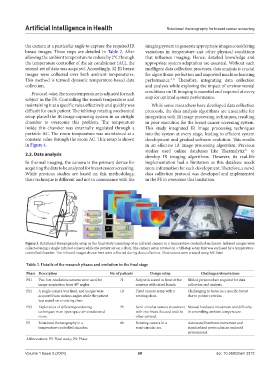
            Figure 3. Rotational thermography setup in the final study consisting of an infrared camera in a temperature-controlled enclosure. Infrared images were
            collected using a single infrared camera while the patient sat on a chair. The camera setup rotated on a tabletop setup that was enclosed by a temperature-
            controlled chamber. The infrared images shown here were collected during data collection. Illustrations were created using MS Paint


            Table 2. Details of the research phases and evolution to the final stage
            Phase Description                   No. of patients  Design setup          Challenges/observations
            PS1  Two low-resolution cameras were used for   71  Subject is seated in front of the   Skilled personnel are required for data
                 image acquisition from 45° angles.        cameras with raised hands.  collection and analysis.
            PS2  A single camera was fixed, and images were   10  Fixed camera setup with a   Challenging to focus on a specific breast
                 acquired from various angles while the patient   rotating chair.  due to patient rotation.
                 was seated on a rotating chair.
            PS3  Exploration of different positioning   33  Semi-circular camera movement  Manual hardware movement and difficulty
                 techniques in an open space air-conditioned   with one breast focused and the  in controlling ambient temperature.
                 room.                                     other covered.
            FS   Rotational thermography in a       88     Rotating camera in a   Automated hardware movement and
                 temperature-controlled chamber.           semi-circular arc.    standardized protocol in an enclosed
                                                                                 environment.
            Abbreviations: FS: Final study; PS: Phase.


            Volume 1 Issue 3 (2024)                         68                               doi: 10.36922/aih.3312

