


Page 77 - AIH-1-3
P. 77
Artificial Intelligence in Health                           Rotational thermography for breast cancer screening


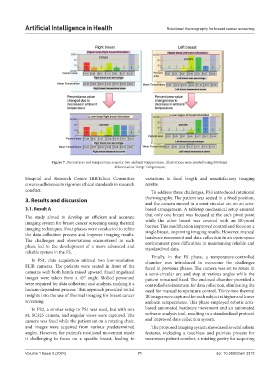
                       Figure 7. Percent area and temperature zone for two ambient temperatures. Illustrations were created using MS Paint.
                                                  Abbreviation: Temp: Temperature.

            Hospital and Research Centre IRB/Ethics Committee   variations in focal length and unsatisfactory imaging
            ensures adherence to rigorous ethical standards in research   results.
            conduct.                                             To address these challenges, PS3 introduced rotational
            3. Results and discussion                          thermography. The patient was seated in a fixed position,
                                                               and the camera moved in a semi-circular arc on an arm-
            3.1. Result A                                      based arrangement. A tabletop mechanical setup ensured
            The study aimed to develop an efficient and accurate   that only one breast was focused at the arc’s pivot point
            imaging system for breast cancer screening using thermal   while  the  other  breast  was covered  with an  IR-proof
            imaging techniques. Four phases were conducted to refine   barrier. This modification improved control and focus on a
            the data collection process and improve imaging results.   single breast, improving imaging results. However, manual
                                                               hardware movement and data collection in an open-space
            The  challenges  and  observations  encountered in  each   environment pose difficulties in maintaining reliable and
            phase led to the development of a more advanced and   standardized data.
            reliable system in the FS.
                                                                 Finally, in the FS phase, a temperature-controlled
              In PS1, data acquisition utilized two low-resolution   chamber was introduced to overcome the challenges
            FLIR  cameras.  The  patients  were  seated  in  front  of  the   faced in previous phases. The camera was set to rotate in
            cameras with both hands raised upward. Fixed angulated   a semi-circular arc and stop at various angles while the
            images were taken from a 45° angle. Skilled personnel   patient remained fixed. The enclosed chamber provided a
            were required for data collection and analysis, making it a   controlled environment for data collection, eliminating the
            human-dependent process. This approach provided initial   need for manual temperature control. Thirty-two thermal
            insights into the use of thermal imaging for breast cancer   IR images were captured for each subject at higher and lower
            screening.                                         ambient temperatures. This phase employed robotic arm-
              In PS2, a similar setup to PS1 was used, but with one   based automated hardware movement and an automated
            FL SC325 camera, and angular views were captured. The   software analysis tool, resulting in a standardized protocol
            camera was fixed while the patient sat on a rotating chair,   and improved data collection system.
            and images were acquired from various predetermined   The proposed imaging system showcased several salient
            angles. However, the patient’s rotational movement made   features, including a touchless and painless process for
            it challenging to focus on a specific breast, leading to   maximum patient comfort, a rotating gantry for acquiring


            Volume 1 Issue 3 (2024)                         71                               doi: 10.36922/aih.3312

