


Page 79 - AIH-1-3
P. 79
Artificial Intelligence in Health                           Rotational thermography for breast cancer screening


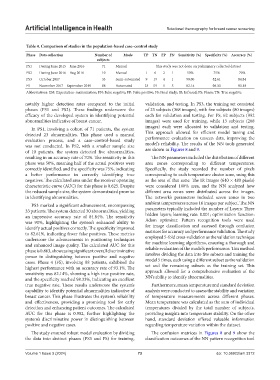
            Table 4. Comparison of studies in the population‑based case–control study
            Phase  Data collection       Number of    Mode    TP  TN  FP  FN  Sensitivity (%) Specificity (%) Accuracy (%)
                                          subjects
            PS1   During June 2015 – June 2016  71  Manual         This study was not done on preliminary collected dataset
            PS2   During June 2016 – Aug 2016  10  Manual      1   6  2   1      50%        75%        70%
            PS3   October 2017              33    Semi-automated  9  19  4  1   90.00      82.61      84.84
            FS    November 2017 – September 2019  88  Automated  23  59  1  5   82.14      98.33      93.18
            Abbreviations: EM: Expectation-maximization; FN: False negative; FP: False positive; FS: Final study; IR: Infrared; PS: Phase; TN: True negative.

            notably higher detection rates compared to the initial   validation, and testing. In PS3, the training set consisted
            phases (PS1 and PS2). These findings underscore the   of 23 subjects (368 images), with five subjects (80 images)
            efficacy of the developed system in identifying potential   each for validation and testing. For FS, 62 subjects (992
            abnormalities indicative of breast cancer.         images)  were  used  for training, while  13 subjects (208
              In PS1, involving a cohort of 71 patients, the system   images) each were allocated to validation and testing.
            detected 23 abnormalities. This phase used a manual   This approach allowed for efficient model tuning and
            evaluation  process,  and  a  case–control-based  study   performance evaluation on unseen data, improving the
            was not conducted. In PS2, with a smaller sample size   model’s reliability. The results of the NN tools generated
            of 10  patients, the system detected five abnormalities,   are shown in Figures 8 and 9.
            resulting in an accuracy rate of 70%. The sensitivity in this   The NN parameters included the distribution of different
            phase was 50%, meaning half of the actual positives were   area zones corresponding to different temperatures.
            correctly identified, and the specificity was 75%, indicating   Specifically, the study recorded the number of pixels
            a better performance in correctly identifying true   corresponding to each temperature cluster zone, using this
            negatives. The calculated area under the receiver operating   as the area of that zone. The IR images (640 × 480 pixels)
            characteristic curve (AUC) for this phase is 0.625. Despite   were  considered  100%  area,  and  the  NN  analyzed  how
            the reduced sample size, the system demonstrated promise   different area zones were distributed across the images.
            in identifying abnormalities.                      The  network’s  parameters  included  seven  zones  in  two
              PS3 marked a significant advancement, encompassing   ambient temperatures across 16 images per subject. The NN
            33 patients. The system detected 30 abnormalities, yielding   parameters typically included the number of Layers: Three
            an  impressive  accuracy  rate  of  84.84%.  The  sensitivity   hidden layers; learning rate: 0.001; optimization function:
            was 90%, highlighting the system’s enhanced ability to   Adam optimizer. Pattern recognition tools were used
            identify actual positives correctly. The specificity improved   for image classification and assessed through confusion
            to 82.61%, indicating fewer false positives. These metrics   matrices for accuracy and performance validation. The study
            underscore the advancements in positioning techniques   employed 5-fold cross-validation as the validation technique
            and enhanced image quality. The calculated AUC for this   for machine learning algorithms, ensuring a thorough and
            phase is 0.863, showcasing significant overall discriminative   reliable evaluation of the model’s performance. This method
            power  in  distinguishing  between positive  and  negative   involves dividing the data into five subsets and training the
            cases.  Phase  4  (FS), involving 88  patients, exhibited  the   model 5 times, each using a different subset as the validation
            highest performance with an accuracy rate of 93.1%. The   set and the remaining subsets as the training set. This
            sensitivity was 82.14%, showing a high true positive rate,   approach allowed for a comprehensive evaluation of the
            and the specificity reached 98.33%, indicating an excellent   NN’s ability to identify abnormalities.
            true negative rate. These results underscore the system’s   Furthermore, mean temperature and standard deviation
            capability to identify potential abnormalities indicative of   analysis were conducted to assess the stability and variation
            breast cancer. This phase illustrates the system’s reliability   of temperature measurements across different phases.
            and effectiveness, providing a promising tool for early   Mean temperature was calculated as the sum of individual
            detection and enhancing patient outcomes. The calculated   temperatures divided by the total number of subjects,
            AUC for this phase is 0.902, further highlighting the   providing insights into temperature stability. On the other
            system’s discriminative power in distinguishing between   hand, standard deviation offered valuable information
            positive and negative cases.                       regarding temperature variation within the dataset.
              The study ensured robust model evaluation by dividing   The confusion matrices in  Figures  8  and  9 show the
            the  data  into  distinct  phases  (PS3  and  FS)  for  training,   classification outcomes of the NN pattern recognition tool


            Volume 1 Issue 3 (2024)                         73                               doi: 10.36922/aih.3312

