


Page 45 - AIH-1-4
P. 45
Artificial Intelligence in Health                             Segmentation and classification of DR using CNN


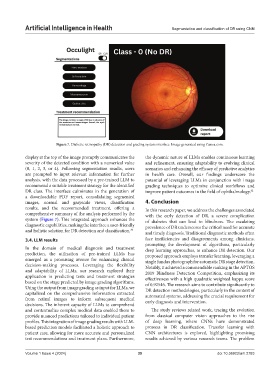
                         Figure 7. Diabetic retinopathy (DR) detection and grading system interface. Image generated using Canva.com.

            display at the top of the image promptly communicates the   the dynamic nature of LLMs enables continuous learning
            severity of the detected condition with a numerical value   and refinement, ensuring adaptability to evolving clinical
            (0, 1, 2, 3, or 4). Following segmentation results, users   scenarios and enhancing the efficacy of predictive analytics
            are prompted to input relevant information for further   in health care. Overall, our findings underscore the
            analysis, with the data processed by a pre-trained LLM to   potential of leveraging LLMs in conjunction with image
            recommend a suitable treatment strategy for the identified   grading techniques to optimize clinical workflows and
            DR  class.  The interface  culminates in  the  generation  of   improve patient outcomes in the field of ophthalmology. 32
            a  downloadable  PDF  report,  consolidating  segmented
            images, normal and grayscale views, classification   4. Conclusion
            results, and the recommended treatment, offering a   In this research paper, we address the challenges associated
            comprehensive summary of the analysis performed by the   with the early detection of DR, a severe complication
            system (Figure 7). This integrated approach enhances the   of  diabetes  that  can lead to  blindness.  The  escalating
            diagnostic capabilities, making the interface a user-friendly   prevalence of DR underscores the critical need for accurate
            and holistic solution for DR detection and classification. 26
                                                               and timely diagnosis. Traditional diagnostic methods often
            3.4. LLM results                                   face inefficiencies and disagreements among clinicians,
                                                               prompting the development of algorithms, particularly
            In the domain of medical diagnosis and treatment   deep learning approaches, to enhance DR detection. Our
            prediction, the utilization of pre-trained LLMs has   proposed approach employs transfer learning, leveraging a
            emerged as a promising avenue for enhancing clinical   single fundus photograph for automatic DR stage detection.
            decision-making processes. Leveraging the flexibility   Notably, it achieved a commendable ranking in the APTOS
            and adaptability of LLMs, our research explored their   2019 Blindness Detection Competition, emphasizing its
            application in predicting  tests and  treatment  strategies   effectiveness with a high quadratic weighted kappa score
            based on the stage predicted by image grading algorithms.   of 0.92546. The research aims to contribute significantly to
            Using the output from image grading as input for LLMs, we   DR detection methodologies, particularly in the context of
            capitalized  on  the  comprehensive  information  extracted   automated systems, addressing the crucial requirement for
            from retinal images to inform subsequent medical   early diagnosis and intervention.
            decisions. The inherent capacity of LLMs to comprehend
            and contextualize complex medical data enabled them to   The study reviews related work, tracing the evolution
            provide nuanced predictions tailored to individual patient   from classical computer vision approaches to the rise
            profiles. This integration of image grading results with LLM-  of deep learning, where CNNs have demonstrated
            based prediction models facilitated a holistic approach to   prowess in DR classification. Transfer learning with
            patient care, allowing for more accurate and personalized   CNN architectures is explored, highlighting promising
            test recommendations and treatment plans. Furthermore,   results achieved by various research teams. The problem


            Volume 1 Issue 4 (2024)                         39                               doi:10.36922/aih.2783

