


Page 81 - AIH-1-4
P. 81
Artificial Intelligence in Health                                 Robotics and Vivaldi AI for ALS assessment


                         A                                     B


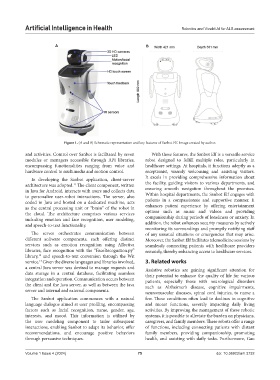
                            Figure 1. (A and B) Schematic representation and key features of Sanbot Elf. Image created by author.

            and activities. Control over Sanbot is facilitated by seven   With these features, the Sanbot Elf is a versatile service
            modules or managers accessible through API libraries,   robot designed to fulfill multiple roles, particularly in
            encompassing functionalities ranging from voice and   healthcare settings. At hospitals, it functions adeptly as a
            hardware control to multimedia and motion control.  receptionist,  warmly  welcoming  and  assisting  visitors.
              In developing the Sanbot application, client-server   It  excels in  providing comprehensive  information about
            architecture was adopted.  The client component, written   the facility, guiding visitors to various departments, and
                                17
            in Java for Android, interacts with users and collects data   ensuring smooth navigation throughout the premises.
            to personalize user-robot interactions. The server, also   Within hospital departments, the Sanbot Elf engages with
            coded in Java and hosted on a dedicated machine, acts   patients in a compassionate and supportive manner. It
            as the central processing unit or “brain” of the robot in   enhances patient experience by offering entertainment
            the cloud. The architecture comprises various services   options  such  as  music  and  videos  and  providing
            including emotion and face recognition, user modeling,   companionship during periods of loneliness or anxiety. In
            and speech-to-text functionality.                  addition, the robot enhances security measures by actively
                                                               monitoring its surroundings and promptly notifying staff
              The server  orchestrates communication  between   of any unusual situations or emergencies that may arise.
            different software components, each offering distinct   Moreover, the Sanbot Elf facilitates telemedicine sessions by
            services such as emotion recognition using Affectiva   seamlessly connecting patients with healthcare providers
            libraries,  face  recognition  with  the  “FaceRecognition.py”   remotely, thereby enhancing access to healthcare services.
            library,  and speech-to-text conversion through the Wit
                 18
            service.  Given the diverse languages and libraries involved,   3. Related works
                  13
            a central Java server was devised to manage requests and   Assistive robotics are gaining significant attention for
            data storage in a central database, facilitating seamless   their potential  to enhance the  quality of  life for various
            integration and operation. Communication occurs between   patients, especially those with neurological disorders
            the client and the Java server, as well as between the Java   such  as  Alzheimer’s  disease,  cognitive  impairments,
            server and internal and external components.       neuromuscular diseases, spinal cord injuries, to name a
              The Sanbot application commences with a natural   few. These conditions often lead to declines in cognitive
            language dialogue aimed at user profiling, encompassing   and motor functions, severely impacting daily living
            factors such as facial recognition, name, gender, age,   activities. By improving the management of these robotic
            interests,  and mood. This information is utilized by   systems, it is possible to alleviate the burden on physicians,
            the user modeling component to tailor subsequent   caregivers, and family members. These robots offer a range
            interactions, enabling Sanbot to adapt its behavior, offer   of  functions,  including connecting  patients with  distant
            recommendations, and encourage positive behaviors   family  members,  providing companionship, promoting
            through persuasive techniques.                     health, and assisting with daily tasks. Furthermore, Gao


            Volume 1 Issue 4 (2024)                         75                               doi: 10.36922/aih.3732

