


Page 87 - AIH-1-4
P. 87
Artificial Intelligence in Health                                 Robotics and Vivaldi AI for ALS assessment


                                                                 The agreement analysis between human and robotic
                                                               ALSFRS-R assessment demonstrated promising results.
                                                               Indeed, the Bland–Altman plot and ICC revealed good
                                                               to excellent agreement between the robotic and human-
                                                               administered questionnaires for both total scores and
                                                               individual  domains  (bulbar,  motor,  and  respiratory).
                                                               This indicates that the robotic device equipped with AI
                                                               technology  can  effectively  administer  the  ALSFRS-R
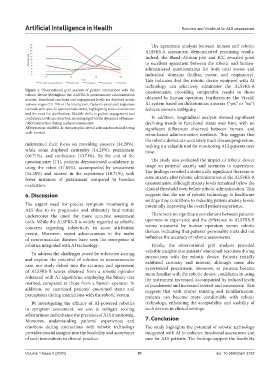
            Figure  4.  Observational grid analysis of patient interactions with the   questionnaire, providing comparable results to those
            robotic device throughout the ALSFRS-R questionnaire administration
            process. Emotional reactions and engagement levels are depicted across   obtained by human operators. Furthermore, the Vivaldi
            various stages (T1–T4) of the interaction. Peaks in emotional responses   AI system based on dichotomous answers (“yes” or “no”)
            coincide with specific questionnaire items, highlighting areas of confusion   reduces answers ambiguity.
            and the need for clarification. Notable shifts in patient engagement and
            confidence levels are observed, shedding light on the dynamics of human-  In addition, longitudinal analysis showed significant
            robot interaction during medical assessments.      declining trends in functional status over time, with no
            Abbreviation: ALSFRS-R: Amyotrophic lateral sclerosis functional rating   significant differences observed between human-  and
            scale-revised.                                     robot-based administration methods. This suggests that
                                                               the robotic device can accurately track disease progression,
            maintained their focus on providing answers (14.28%),   making it a valuable tool for monitoring ALS patients over
            while some displayed neutrality (14.28%), puzzlement   time.
            (10.71%), and confidence (10.71%). By the end of the
            questionnaire  (T4),  patients  demonstrated  confidence  in   The study also evaluated the impact of robotic device
            using the robot (17.85%), accompanied by amusement   usage on patients’ anxiety and openness to experience.
            (14.28%) and interest in the experience (10.71%), with   The findings revealed a statistically significant decrease in
            fewer  instances  of puzzlement compared  to baseline   state anxiety after robotic administration of the ALSFRS-R
            evaluation.                                        questionnaire, although anxiety levels remained below the
                                                               clinical threshold even before robotic administration. This
            6. Discussion                                      suggests that the use of robotic technology in healthcare
                                                               settings may contribute to reducing patient anxiety levels,
            The urgent need for precise symptom monitoring in   potentially improving the overall patient experience.
            ALS  due  to its progressive  and  ultimately  fatal  nature
            underscores the quest for more accurate assessment   There were no significant correlations between patients’
            tools. While the ALSFRS-R is widely regarded as reliable,   openness to experience and the difference in ALSFRS-R
            concerns  regarding  subjectivity  in  score  attribution   scores measured by human operators versus robotic
            persist. Moreover, recent advancements in the realm   devices, indicating that patients’ personality traits did not
            of neuromuscular diseases have seen the emergence of   influence the accuracy of robotic assessments.
            robotics integrated with AI technology.              Finally, the observational grid analysis provided
              To address the challenges posed by subjective scoring   valuable insights into patients’ emotional reactions during
            and  explore  the  potential  of  robotics  in  neuromuscular   interactions with the robotic device. Patients initially
                                                               exhibited curiosity and interest, although some also
            care, our study delved into the accuracy and agreement   experienced puzzlement. However, as patients became
            of ALSFRS-R scores obtained from a robotic operator   more familiar with the robotic device, confidence in using
            enhanced with AI algorithms, employing the binary tree   the instrument increased, accompanied by reduced levels
            method, compared to those from a human operator. In   of puzzlement and increased interest and amusement. This
            addition, we examined patients’ emotional states and   suggests that with proper training and familiarization,
            perceptions during interactions with the robotic system.  patients can become more comfortable with robotic
              By investigating the efficacy of AI-powered robotics   technology, enhancing the acceptability and usability of
            in  symptom  assessment,  we  aim  to  mitigate  scoring   such devices in clinical settings.
            arbitrariness and enhance the precision of ALS monitoring.
            Moreover, understanding patients’ experiences and   7. Conclusion
            emotions during interactions with robotic technology   The study highlights the potential of robotic technology
            provides crucial insights into the feasibility and acceptance   integrated with AI to enhance functional assessment and
            of such innovations in clinical practice.          care for ALS patients. The findings support the feasibility


            Volume 1 Issue 4 (2024)                         81                               doi: 10.36922/aih.3732

