


Page 104 - AIH-2-3
P. 104
Artificial Intelligence in Health                                  Bone suppression utility for chest diagnosis


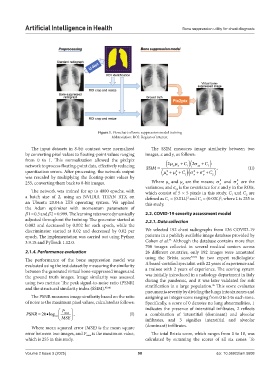
                                           Figure 1. Flowchart of bone suppression model training
                                                Abbreviation: ROI: Region of interest.

              The input datasets in 8-bit contrast were normalized   The  SSIM measures image similarity  between  two
            by converting pixel values to floating-point values ranging   images, x and y, as follows:
            from 0 to 1. This normalization allowed the pix2pix                         C
            network to process floating-point data, effectively reducing   SSIM    2 y   C  2 xy    2  ,  (II)
                                                                           x
                                                                                1
            quantization errors. After processing, the network output   x   2    2 y   C   2 x   2 y   C
                                                                                1
                                                                                           2
            was  rescaled  by  multiplying  the  floating-point  values  by
                                                                                               2
                                                                                                      2
            255, converting them back to 8-bit images.           Where µ  and µ  are the means;  σ  and  σ  are the
                                                                                                      y
                                                                                              x
                                                                               y
                                                                         x
                                                               variances; and σ  is the covariance for x and y in the ROIs,
                                                                            xy
              The network was trained for up to 4000 epochs, with   which consist of 5 × 5 pixels in this study. C  and C  are
                                                                                                    1
                                                                                                          2
            a  batch  size  of  2,  using  an  NVIDIA  TITAN  RTX  on   defined as C  = (0.01L)  and C  = (0.03L) , where L is 255 in
                                                                                               2
                                                                                 2
            an Ubuntu 20.04.6 LTS operating system. We applied   this study.  1       2
            the Adam optimizer with momentum parameters of
            1 = 0.5 and 2 = 0.999. The learning rates were dynamically   2.2. COVID-19 severity assessment model
            adjusted throughout the training: The generator started at   2.2.1. Data collection
            0.002 and decreased by 0.002 for each epoch, while the
            discriminator started at 0.02 and decreased by 0.02 per   We selected 192 chest radiographs from 136 COVID-19
            epoch. The implementation was carried out using Python   patients in a publicly available image database provided by
                                                                         33
            3.9.18 and PyTorch 1.12.0.                         Cohen et al.  Although the database contains more than
                                                               700 images collected in several medical centers across
            2.1.4. Performance evaluation                      26  different countries, only 192 images were annotated
            The performance of the bone suppression model was   using the Brixia score 33,34  by two expert radiologists:
            evaluated using the test dataset by measuring the similarity   A board-certified specialist with 22 years of experience and
            between the generated virtual bone-suppressed images and   a trainee with 2 years of experience. The scoring system
            the  ground  truth  images.  Image  similarity  was  assessed   was initially introduced in a radiology department in Italy
            using two metrics: The peak signal-to-noise ratio (PSNR)   during the pandemic, and it was later validated for risk
                                                                                           36
            and the structural similarity index (SSIM). 45,46  stratification in a large population.  This score evaluates
                                                               pneumonia severity by dividing the lungs into six zones and
              The PSNR measures image similarity based on the ratio   assigning an integer score ranging from 0 to 3 to each zone.
            of noise to the maximum pixel values, calculated as follows:  Specifically, a score of 0 denotes no lung abnormalities, 1
                            P                                indicates the presence of interstitial infiltrates, 2  reflects
            PSNR  20log 10   max   ,                (I)    a  combination  of interstitial  (dominant)  and alveolar
                            MSE                              infiltrates, and 3  signifies interstitial and alveolar
              Where mean squared error (MSE) is the mean square   (dominant) infiltrates.
            error between two images, and P max  is the maximum value,   The total Brixia score, which ranges from 0 to 18, was
            which is 255 in this study.                        calculated by summing the scores of all six zones. To
            Volume 2 Issue 3 (2025)                         98                               doi: 10.36922/aih.5608

