


Page 116 - AIH-2-3
P. 116
Artificial Intelligence in Health                              Opportunities for AI-based arrhythmia screening


            A                                                  B


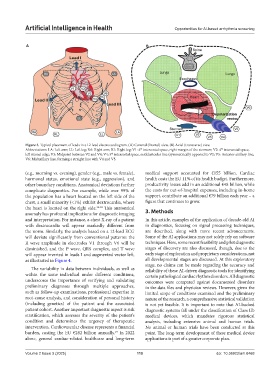
            Figure 3. Typical placement of leads in a 12-lead electrocardiogram. (A) Coronal (frontal) view. (B) Axial (transverse) view
                                                             th
            Abbreviations: LA: Left arm; LL: Left leg; RA: Right arm; RL: Right leg; V1: 4  intercostal space, right margin of the sternum; V2: 4  intercostal space,
                                                                                               th
                                                th
            left sternal edge; V3: Midpoint between V2 and V4; V4: 5  intercostal space, midclavicular line (symmetrically opposed to V2; V5: Anterior axillary line;
            V6: Midaxillary line, forming a straight line with V4 and V5.
            (e.g., morning vs. evening), gender (e.g., male vs. female),   medical support accounted for  €155 billion. Cardiac
            hormonal status, emotional state (e.g., aggression), and   health costs the EU 11% of its health budget. Furthermore,
            other boundary conditions. Anatomical deviations further   productivity losses add in an additional €48 billion, while
            complicate diagnostics. For example, while over 99% of   the costs for out-of-hospital expenses, including in-home
            the population has a heart located on the left side of the   support, contribute an additional €79 billion each year – a
            chest, a small minority (<1%) exhibit dextrocardia, where   figure that continues to grow.
            the heart is located on the right side. 16-18  This anatomical
            anomaly has profound implications for diagnostic imaging   3. Methods
            and interpretation. For instance, a chest X-ray of a patient   In this article, examples of the application of decade-old AI
            with dextrocardia will appear markedly different from   in diagnostics, focusing on signal processing techniques,
            the norm. Similarly, the analysis based on a 12-lead ECG   are described, along with more recent advancements.
            will deviate significantly from conventional patterns: the   Some of the AI applications may not solely rely on software
            R wave amplitude in electrodes V1 through V6 will be   techniques. Here, some recent feasibility and pilot diagnostic
            diminished, and the P wave, QRS complex, and T wave   stages of discovery are also discussed, though, due to the
            will appear inverted in leads I and augmented vector left,   early stage of exploration and proprietary considerations, not
            as illustrated in Figure 4.                        all developmental stages are discussed. At this exploratory
                                                               stage, no claims can be made regarding the accuracy and
              The variability in data between individuals, as well as   reliability of these AI-driven diagnostic tools for identifying
            within the same individual under different conditions,   certain pathological cardiac rhythm disorders. All diagnostic
            underscores the importance of verifying and validating   outcomes were compared against documented disorders
            preliminary diagnoses  through multiple approaches,   in the data files and physician reviews. However, given the
            such as follow-up examinations, professional expertise in   limited scope of conditions examined and the preliminary
            root-cause analysis, and consideration of personal history   nature of the research, a comprehensive statistical validation
            (including genetics) of the patient and the associated   is not yet feasible. It is important to note that AI-backed
            patient cohort. Another important diagnostic aspect is risk   diagnostic systems fall under the classification of Class IIb
            stratification, which assesses the severity of the patient’s   medical devices, which mandates rigorous statistical
            condition and determines the urgency of therapeutic   analysis, including extensive animal and human trials.
            intervention. Cardiovascular disease represents a financial   No animal or human trials have been conducted at this
                                                  19
            burden, costing the EU €282 billion annually.  In 2022   point. The long-term development of these medical device
            alone, general cardiac-related healthcare and long-term   applications is part of a greater corporate plan.

            Volume 2 Issue 3 (2025)                        110                               doi: 10.36922/aih.8468

