


Page 128 - AJWEP-22-5
P. 128
Nkinda, et al.

                               a                         b                       c


                              d


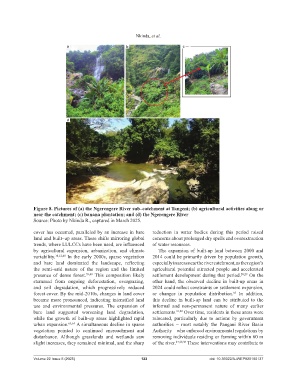
                Figure 8. Pictures of (a) the Ngerengere River sub–catchment at Tangeni; (b) agricultural activities along or
                near the catchment; (c) banana plantation; and (d) the Ngerengere River
                Source: Photo by Nkinda R., captured in March 2025.

                cover has occurred, paralleled by an increase in bare   reduction in water bodies during this period raised
                land and built–up areas. These shifts mirroring global   concerns about prolonged dry spells and overextraction
                trends, where LULCCs have been used, are influenced   of water resources.
                by  agricultural  expansion,  urbanization,  and  climate   The  expansion  of  built-up  land  between  2000  and
                variability. 10,12,40  In the early 2000s, sparse vegetation   2014 could be primarily driven by population growth,
                and  bare  land  dominated  the  landscape,  reflecting   especially in areas near the river catchment, as the region’s
                the  semi–arid  nature  of  the  region  and  the  limited   agricultural  potential  attracted people and accelerated
                presence of dense forest. 39,40   This composition likely   settlement development during that period. 28,29  On the
                stemmed from ongoing deforestation, overgrazing,    other  hand,  the  observed  decline  in  built-up  areas  in
                and soil degradation, which progressively reduced   2024 could reflect constraints on settlement expansion,
                forest cover. By the mid-2010s, changes in land cover   or changes in population  distribution.  In addition,
                                                                                                        65
                became more pronounced, indicating intensified land   this  decline  in  built-up  land  can  be  attributed  to  the
                use  and  environmental  pressures.  The  expansion  of   informal  and non-permanent  nature  of many  earlier
                bare land suggested worsening land degradation,     settlements. 27,28  Over time, residents in these areas were
                while the growth of built-up areas highlighted rapid   relocated,  particularly  due  to  actions  by  government
                urban expansion. 63,64  A simultaneous decline in sparse   authorities  –  most  notably  the  Pangani  River  Basin
                vegetation pointed to continued encroachment and    Authority – who enforced environmental regulations by
                disturbance.  Although grasslands and wetlands saw   removing individuals residing or farming within 60 m
                slight increases, they remained minimal, and the sharp   of the river. 27,28,38  These interventions may contribute to


                Volume 22 Issue 5 (2025)                       122                           doi: 10.36922/AJWEP025180137

