


Page 141 - AJWEP-22-5
P. 141
Climate trend and policy in Lake Tana Basin

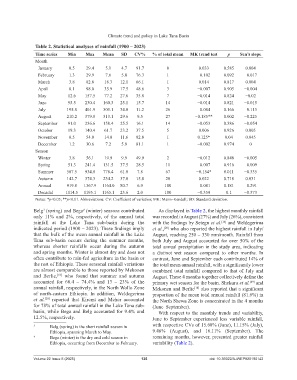
                 Table 2. Statistical analyses of rainfall (1900 – 2023)
                 Time series   Min     Max    Mean    SD    CV%     % of total mean  MK trend test   p     Sen’s slope
                 Month
                  January      0.5     29.4    5.1    4.7    91.7         0              0.033      0.585    0.004
                  February     1.3     29.9    7.6    5.8    76.3         1             −0.102      0.092    −0.017
                  March        3.8     82.8    18.3   12.1   66.1         1              0.014      0.817    0.004
                  April        8.1     98.0    35.9   17.5   48.6         3             −0.007      0.905    −0.004
                  May          12.6   157.5    77.2   27.6   35.8         7             −0.014      0.824    −0.02
                  June         95.5   230.4   160.3   25.1   15.7         14            −0.014      0.821    −0.015
                  July        195.8   401.9   305.1   34.0   11.2         26            −0.084      0.166    −0.113
                  August      210.2   379.8   313.1   29.6   9.5          27           −0.185**     0.002    −0.225
                  September    91.0   236.6   158.4   25.5   16.1         14            −0.053      0.386    −0.054
                  October      19.3   140.4    61.7   23.2   37.5         5              0.006      0.926    0.005
                  November     0.5     54.0    14.0   11.6   82.8         1             0.125*      0.04     0.045
                  December     1.2     30.6    7.2    5.9    81.1         1             −0.002      0.974      0
                 Season
                  Winter       3.8     56.1    19.9   9.9    49.9         2             −0.012      0.848    −0.005
                  Spring       51.3   241.4   131.5   37.5   28.5         11            −0.007      0.916    −0.009
                  Summer      567.5   934.8   778.4   61.0   7.8          67           −0.154*      0.011    −0.335
                  Autumn      142.7   374.3   234.2   37.0   15.8         20             0.022      0.718    0.031
                  Annual      919.8   1367.9  1164.0  80.7   6.9         100            −0.081      0.181    −0.291
                  Decadal     1114.5  1195.1  1165.1  23.6   2.0         100            −0.359       0.1     −0.373
                 Notes: *p<0.05; **p<0.01. Abbreviations: CV: Coefficient of variation; MK: Mann–Kendall; SD: Standard deviation.

                Belg  (spring) and Bega  (winter) seasons contributed   As displayed in Table 2, the highest monthly rainfall
                                      4
                    3
                only  11%  and  2%,  respectively,  of  the  annual  total   was recorded in August (27%) and July (26%), consistent
                rainfall at the Lake  Tana sub-basin during the     with the findings by Setegn et al.  and Weldegerima
                                                                                                  [16]
                indicated period (1900 – 2023). These findings imply   et al.,  who also reported the highest rainfall in July/
                                                                         [20]
                that the bulk of the mean annual rainfall in the Lake   August, reaching 250 – 330 mm/month. Rainfall from
                Tana sub-basin occurs during the summer months,     both July and August accounted for over 50% of the
                whereas  shorter  rainfalls  occur  during  the  autumn   total annual precipitation in the study area, indicating
                and spring months. Winter is almost dry and does not   a distinct  wet season compared  to other  months. In
                often contribute to rain-fed agriculture in the basin or   contrast, June and September each contributed 14% of
                the rest of Ethiopia. These seasonal rainfall variations   the total mean annual rainfall, with a significantly lower
                are almost comparable to those reported by Mekonen   combined  total  rainfall  compared  to that  of July and
                and Berlie, [10]  who found that summer and autumn   August. These 4 months together collectively define the
                accounted  for  68.4  –  74.4%  and  13  –  23%  of  the   primary wet season for the basin. Shekuru et al.  and
                                                                                                               [49]
                annual rainfall, respectively, in the North Wollo Zone   Mekonen and Berlie  also reported that a significant
                                                                                       [10]
                of north-eastern Ethiopia. In addition,  Weldegerima   proportion of the mean total annual rainfall (81.6%) in
                et al. [20]   reported  that  Kiremt  and  Meher  accounted   the North Shewa Zone is concentrated in the 4 months
                for 78% of total annual rainfall in the Lake Tana sub-  (June–September).
                basin, while Bega and Belg accounted for 9.4% and      With respect to the monthly trends and variability,
                12.5%, respectively.                                June to  September  experienced  less variable  rainfall,

                3       Belg (spring) is the short rainfall season in   with respective CVs of 15.68% (June), 11.15% (July),
                       Ethiopia, spanning March to May.             9.46%  (August),  and  16.11%  (September).  The
                4       Bega (winter) is the dry and cold season in   remaining months, however, presented greater rainfall
                       Ethiopia, occurring from December to February.  variability (Table 2).


                Volume 22 Issue 5 (2025)                       135                           doi: 10.36922/AJWEP025190142

