


Page 90 - AJWEP-22-5
P. 90
Fan, et al.


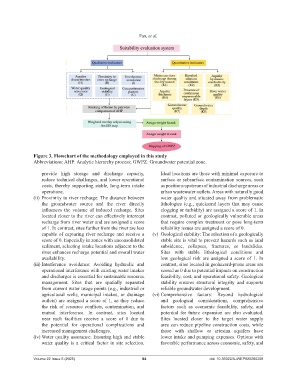
                Figure 3. Flowchart of the methodology employed in this study
                Abbreviations: AHP: Analytic hierarchy process; GWPZ: Groundwater potential zone.


                   provide high storage and discharge capacity,         Ideal locations are those with minimal exposure to
                   reduce technical challenges, and lower operational   surface or subsurface contamination sources, such
                   costs,  thereby  supporting  stable, long-term  intake   as positions upstream of industrial discharge areas or
                   operations.                                          urban wastewater outlets. Areas with naturally good
                (ii)  Proximity to river recharge: The distance between   water quality and situated away from problematic
                   the  groundwater  source  and  the  river  directly   lithologies (e.g., quicksand layers that may cause
                   influences  the  volume  of  induced  recharge.  Sites   clogging or turbidity) are assigned a score of 1. In
                   located closer to the river can effectively intercept   contrast, polluted or geologically vulnerable areas
                   recharge from river water and are assigned a score   that require complex treatment or pose long-term
                   of 1. In contrast, sites farther from the river are less   reliability issues are assigned a score of 0.
                   capable of capturing river recharge and receive a   (v)  Geological stability: The selection of a geologically
                   score of 0. Especially in zones with unconsolidated   stable site is vital to prevent hazards such as land
                   sediment, selecting intake locations adjacent to the   subsidence,  collapses,  fractures,  or  landslides.
                   river enhances recharge potential and overall water   Sites with stable lithological  conditions  and
                   availability.                                        low geological risk are assigned a score of 1. In
                (iii) Interference  avoidance:  Avoiding hydraulic and   contrast, sites located in geohazard-prone areas are
                   operational interference with existing water intakes   scored as 0 due to potential impacts on construction
                   and discharges is essential for sustainable resource   feasibility, cost, and operational safety. Geological
                   management.  Sites that are spatially separated      stability  ensures  structural  integrity  and  supports
                   from current water usage points (e.g., industrial or   reliable groundwater development.
                   agricultural  wells,  municipal intakes,  or  drainage   (vi) Comprehensive  factors:  Beyond  hydrological
                   outlets) are assigned a score of 1, as they reduce   and  geological  considerations,  comprehensive
                   the  risk  of  resource  conflicts,  contamination,  and   factors  such  as  economic  feasibility,  safety,  and
                   mutual  interference.  In contrast, sites located    potential  for future expansion are also evaluated.
                   near  such facilities  receive  a score of 0 due to   Sites  located  closer  to  the  target  water  supply
                   the potential  for operational  complications  and   area can reduce pipeline construction costs, while
                   increased management challenges.                     those with shallow or artesian aquifers have
                (iv) Water quality assurance: Ensuring high and stable   lower intake and pumping expenses. Options with
                   water quality is a critical  factor in site selection.   favorable performance across economic, safety, and


                Volume 22 Issue 5 (2025)                        84                           doi: 10.36922/AJWEP025260208

