


Page 94 - AJWEP-22-5
P. 94
Fan, et al.

                characteristics and hydrogeological conditions of the   quarterly  sampling  and  compliance  with  national
                study area, the Natural Breaks classification method in   standards  –  GB/T  14848-2017  for  groundwater  and
                ArcGIS (Esri, Inc., USA) was employed to integrate   GB 3838-2002 for surface water – with multiple types
                the quantitative and qualitative evaluation results   of parameters measured. Geological surveys provided
                using a 1:1 weighting ratio. The final comprehensive   information  on  the  types  and  thicknesses  of  riverbed
                suitability grading of the water source site is presented   sediments, which were analyzed to assess their impact
                in Table 5.                                         on lateral recharge capacity.
                                                                       Based on borehole logs and pumping test data, the
                4. Results of the suitability for water intake      permeability characteristics of the aquifer were analyzed.
                                                                    Combined  with  terrain  data  and  K8  measurements,
                Long-term hydrological monitoring data were used to   the spatial distribution of K4 and K8 was calculated.
                determine the seasonal runoff variation patterns during   Geological  exploration  was conducted  to determine
                the  dry season.  The  dataset  covered  the  period  from   the  distribution  range  and  thickness  of  continuous
                2013 to 2022, with 12 monitoring stations distributed   impermeable  layers  and  to  evaluate  their  impact  on
                across the study area  and monthly  average  values   aquifer permeability. For water quality analysis, samples
                recorded.  The  water  quality  sampling  plan  included   from both river water and groundwater were collected,

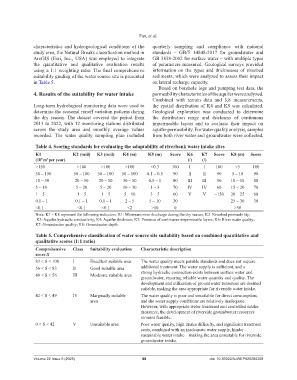
                 Table 4. Scoring standards for evaluating the adaptability of riverbank water intake sites
                 K1              K2 (m/d)   K3 (m/d)   K4 (m)     K5 (m)    Score  K6     K7   Score   K8 (m)  Score
                 (10 m per year)                                                    (/)   (/)
                   9
                      3
                 >150              >100      >100       >100       <0.3      100    Ι      Ι    100      <5     100
                 50 – 150        50 – 100   50 – 100   50 – 100   0.1 – 0.5  90     Ⅱ     Ⅱ      90    5 – 10    90
                 10 – 50          20 – 50    20 – 50   30 – 50    0.5 – 1    80     Ⅲ     Ⅲ      80    10 – 15   80
                 5 – 10           5 – 20     5 – 20    10 – 30     1 – 3     70     Ⅳ     Ⅳ      60    15 – 20   70
                 1 – 5             1 – 5      1 – 5     5 – 10     3 – 5     60     Ⅴ     Ⅴ    −150    20 – 25   60
                 0.1 – 1          0.1 – 1    0.1 – 1    2 – 5      5 – 10    30                        25 – 30   30
                 <0.1              <0.1       <0.1       <2         >10       0                         >30
                 Note: K1 – K8 represent the following indicators: K1: Minimum river discharge during the dry season; K2: Riverbed permeability;
                  K3: Aquifer hydraulic conductivity; K4: Aquifer thickness; K5: Presence of continuous impermeable layers; K6: River water quality;
                 K7: Groundwater quality; K8: Groundwater depth.

                 Table 5. Comprehensive classification of water source site suitability based on combined quantitative and
                 qualitative scores (1:1 ratio)
                 Comprehensive   Class   Suitability evaluation  Characteristic description
                 score S
                 83 < S < 100    Ι       Excellent suitable area  The water quality meets potable standards and does not require
                 56 < S < 83     Ⅱ       Good suitable area    additional treatment. The water supply is sufficient, and a
                 49 < S < 56     Ⅲ       Moderate suitable area  strong hydraulic connection exists between surface water and
                                                               groundwater, ensuring reliable water quantity and quality. The
                                                               development and utilization of groundwater resources are deemed
                                                               suitable, making the area appropriate for riverside water intake.
                 42 < S < 49     Ⅳ       Marginally suitable   The water quality is poor and unsuitable for direct consumption,
                                         area                  and the water supply conditions are relatively inadequate.
                                                               However, with appropriate water treatment and controlled intake
                                                               measures, the development of riverside groundwater resources
                                                               remains feasible.
                 0 < S < 42      Ⅴ       Unsuitable area       Poor water quality, high intake difficulty, and significant treatment
                                                               costs, combined with an inadequate water supply, hinder
                                                               sustainable water intake – making the area unsuitable for riverside
                                                               groundwater intake.


                Volume 22 Issue 5 (2025)                        88                           doi: 10.36922/AJWEP025260208

