


Page 12 - AJWEP-22-6
P. 12
Syromiatnykov

                enzymatic activity and soil microbial diversity. 52,59  When   Humic  substances  extracted  from  soybean  straw
                humic acids are produced from composted urban green   and  cassava  waste  through  composting  and  alkaline
                waste or fish waste, their molecular structure improves,   extraction  primarily  yield  humic  and  fulvic  acids.
                further  supporting  plant  growth  and  environmental   These compounds have been reported to increase
                resilience. 31,60                                   soil  pH,  mitigate  aluminum  toxicity,  and  enhance
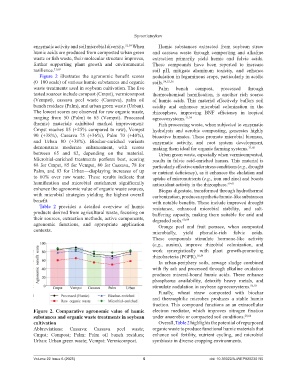
                  Figure  2  illustrates  the  agronomic  benefit  scores   nodulation in leguminous crops, particularly in acidic
                (0–100 scale) of various humic substances and organic   soils. 54,55,56
                waste treatments used in soybean cultivation. The five   Palm  bunch   compost,   processed   through
                tested sources include compost (Cmpst), vermicompost   thermochemical  humification,  is  another  rich  source
                (Vcmpst),  cassava  peel  waste  (Cassava),  palm  oil   of  humic  acids.  This  material  effectively  buffers  soil
                bunch residues (Palm), and urban green waste (Urban).   acidity  and  enhances  microbial  colonization  in  the
                The lowest scores are observed for raw organic waste,   rhizosphere,  improving  BNF  efficiency  in  tropical
                ranging from 50 (Palm) to 65 (Vcmpst). Processed    agroecosystems. 31,54
                (humic)  materials  exhibited  marked  improvement:    Fish processing waste, when subjected to enzymatic
                Cmpst reaches 85 (+25% compared to raw), Vcmpst     hydrolysis and aerobic  composting, generates  highly
                90  (+38%),  Cassava  75  (+36%),  Palm  70  (+40%),   bioactive humates. These promote microbial biomass,
                and  Urban  80  (+38%).  Biochar-enriched  variants   enzymatic  activity,  and  root  system  development,
                demonstrate  moderate  enhancement,  with  scores   making them ideal for organic farming systems. 31,60
                between  65  and  82,  depending  on  the  material.   Urban green waste, especially when vermicomposted,
                Microbial-enriched  treatments  perform  best,  scoring   results  in  fulvic  acid-enriched  humus. This  material  is
                88 for Cmpst, 85 for Vcmpst, 80 for Cassava, 78 for   particularly effective under stress conditions (e.g., drought
                Palm,  and  83  for  Urban—displaying  increases  of  up   or nutrient deficiency), as it enhances the chelation and
                to  60%  over  raw  waste.  These  results  indicate  that   uptake of micronutrients (e.g., iron and zinc) and boosts
                humification  and  microbial  enrichment  significantly   antioxidant activity in the rhizosphere. 59-61
                enhance the agronomic value of organic waste sources,   Biogas digestate, transformed through hydrothermal
                with microbial strategies yielding the highest overall   carbonization, produces synthetic humic-like substances
                benefit.                                            with notable benefits. These include improved drought
                  Table  2  provides  a  detailed  overview  of  humic   resistance,  enhanced  microbial  stability, and salt-
                products derived from agricultural waste, focusing on   buffering capacity, making them suitable for arid and
                their sources, extraction methods, active components,   degraded soils. 60,64
                agronomic functions, and appropriate application       Orange  peel  and  fruit  pomace,  when  composted
                contexts.                                           microbially,  yield  phenolic-rich  fulvic  acids.
                                                                    These compounds stimulate  hormone-like  activity
                                                                    (e.g.,  auxins),  improve  rhizobial  colonization,  and
                                                                    work  synergistically  with  plant  growth-promoting
                                                                    rhizobacteria (PGPR). 50,54
                                                                       In  urban-periphery  soils,  sewage  sludge  combined
                                                                    with fly ash and processed through alkaline oxidation
                                                                    produces mineral-bound  humic  acids.  These enhance
                                                                    phosphorus  availability,  detoxify  heavy  metals,  and
                                                                    stimulate nodulation in soybean agroecosystems. 56,59
                                                                       Finally,  wheat  straw  composted  with  biochar
                                                                    and  thermophilic  microbes  produces  a  stable humin
                                                                    fraction. This compound functions as an extracellular
                Figure  2. Comparative agronomic value of humic     electron  mediator,  which  improves  nitrogen  fixation
                substances and organic waste treatments in soybean   under anaerobic or compacted soil conditions. 28,64
                cultivation                                            Overall, Table 2 highlights the potential of repurposed
                Abbreviations:   Cassava:   Cassava   peel   waste;   organic waste to produce functional humic materials that
                Cmpst:  Compost;  Palm:  Palm  oil  bunch  residues;   enhance  soil fertility, nutrient  cycling,  and microbial
                Urban: Urban green waste; Vcmpst: Vermicompost.     symbiosis in diverse cropping environments.


                Volume 22 Issue 6 (2025)                        6                            doi: 10.36922/AJWEP025230190

