


Page 37 - AN-2-2
P. 37
Advanced Neurology                                                                  Seizures and CKD


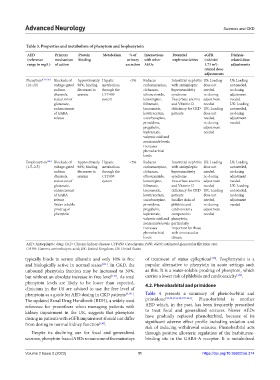
            Table 3. Properties and metabolism of phenytoin and fosphenytoin
             AED        Primary   Protein    Metabolism  % of   Interactions   Potential   eGFR    Dialysis‑
             (reference   mechanism   binding          urinary   with other   nephrotoxicities  (mL/min/   related dose
             range in mg/L)  of action                excretion  AEDs                   1.73 m )‑   adjustments
                                                                                             2
                                                                                        related dose
                                                                                        adjustments
            Phenytoin [131-135]  Blockade of   Approximately  Hepatic   <5%  Reduces   Interstitial nephritis  US: Loading   US: Loading
            (10–20)     voltage-gated  90%; binding  metabolism   carbamazepine,   with antiepileptic   dose not   not needed,
                        sodium    decreases in   through the   clobazam,   hypersensitivity   needed,   no dosing
                        channels,   uremia  CYP450            ethosuximide,   syndrome  no dosing   adjustment
                        reduction of        system            lamotrigine,   Exacerbate anemia  adjustment   needed
                        glutamate,                            felbamate,   and Vitamin D   needed  UK: Loading
                        enhancement                           lacosamide,   deficiency for CKD  UK: Loading   not needed,
                        of GABA                               levetiracetam,   patients  dose not   no dosing
                        release                               oxcarbazepine,            needed,    adjustment
                                                              primidone,                no dosing   needed
                                                              pregabalin,               adjustment
                                                              topiramate,               needed
                                                              valproic acid and
                                                              zonisamide levels
                                                              Increases
                                                              phenobarbital
                                                              levels
            Fosphenytoin [136]  Blockade of   Approximately  Hepatic   <5%  Reduces   Interstitial nephritis  US: Loading   US: Loading
            (1.5–2.5)   voltage-gated  90%; binding  metabolism   carbamazepine,   with antiepileptic   dose not   not needed,
                        sodium    decreases in   through the   clobazam,   hypersensitivity   needed,   no dosing
                        channels,   uremia  CYP450            ethosuximide,   syndrome  no dosing   adjustment
                        reduction of        system            lamotrigine,   Exacerbate anemia  adjustment   needed
                        glutamate,                            felbamate,   and Vitamin D   needed  UK: Loading
                        enhancement                           lacosamide,   deficiency for CKD  UK: Loading   not needed,
                        of GABA                               levetiracetam,   patients  dose not   no dosing
                        release                               oxcarbazepine,   Smaller risks of   needed,   adjustment
                        Water-soluble                         primidone,   phlebitis and   no dosing   needed
                        prodrug of                            pregabalin,   cardiotoxicity   adjustment
                        phenytoin                             topiramate,   compared to   needed
                                                              valproic acid and  phenytoin,
                                                              zonisamide levels particularly
                                                              Increases   important for those
                                                              phenobarbital   with renovascular
                                                              levels      disease
            AED: Antiepileptic drug; CKD: Chronic kidney disease; CYP450: Cytochrome P450; eGFR: estimated glomerular filtration rate;
            GABA: Gamma-aminobutyric acid; UK: United Kingdom; US: United States

            typically binds to serum albumin and only 10% is free   of treatment of status epilepticus [135] . Fosphenytoin is a
            and biologically active in normal states [131] . In CKD, the   popular alternative to phenytoin in acute settings such
            unbound phenytoin fraction may be increased to 30%,   as this. It is a water-soluble prodrug of phenytoin, which
            but without an absolute increase in free level [131] . As total   carries a lower risk of phlebitis and cardiotoxicity [136] .
            phenytoin levels are likely to be lower than expected,   4.2. Phenobarbital and primidone
            clinicians in the US are advised to use the free level of
            phenytoin as a guide for AED dosing in CKD patients [9,131] .   Table 4 presents a summary of phenobarbital and
            The updated Renal Drug Handbook (RDH), a widely used   primidone [9,130,131,135,137-141] .  Phenobarbital  is  another
            reference for prescribers when managing patients with   AED which, in the past, has been frequently prescribed
            kidney impairment in the UK, suggests that phenytoin   to treat focal and generalized seizures. Newer AEDs
            dosing in patients with eGFR impairment should not differ   have gradually replaced phenobarbital, because of its
            from dosing in normal kidney function [130] .      significant adverse effect profile including sedation and
                                                               risk of inducing withdrawal seizures. Phenobarbital acts
              Despite its declining use for focal and generalized   through positive allosteric regulation of the barbiturate-
            seizures, phenytoin-based AEDs remain one of the mainstays   binding  site  in  the  GABA-A receptor.  It  is  metabolized


                                                            11
            Volume 2 Issue 2 (2023) olume 2 Issue 2 (2023)   11                        https://doi.org/10.36922/an.314
            V
                                                                                       https://doi.org/10.36922/an.314

