


Page 93 - AN-2-2
P. 93
Advanced Neurology                                                        Brain AT -R and kidney crosstalk
                                                                                            1


                                 A


                                 B


                                 C


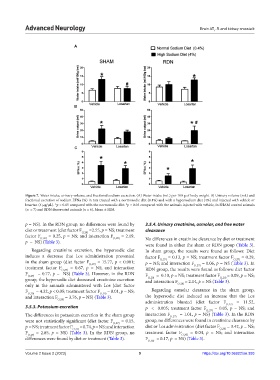
            Figure 7. Water intake, urinary volume, and fractional sodium excretion. (A) Water intake (mL) per 100 g of body weight. B) Urinary volume (mL) and
            fractional excretion of sodium EFNa (%) in rats treated with a normosodic diet (0.4%) and with a hypersodium diet (4%) and injected with vehicle or
            losartan (4 µg/µL). *p < 0.05 compared with the normosodic diet.  p < 0.05 compared with the animals injected with vehicle, in SHAM control animals
                                                       #
            (n  = 7) and RDN denervated animals (n = 6). Mean ± SEM.

            p = NS). In the RDN group, no differences were found by   3.5.4. Urinary creatinine, osmolar, and free water
            diet or treatment (diet factor F (1,20)  =2.55, p = NS; treatment   clearance
            factor F (1,20)  = 0.25, p = NS; and interaction F (1,20)  = 2.19,   No differences in creatinine clearance by diet or treatment
            p  =  NS) (Table 3).
                                                               were found in either the sham or RDN group (Table 3).
              Regarding creatinine excretion, the hypersodic diet   In sham group, the results were found as follows: Diet
            induces a decrease that Los administration prevented   factor F   = 0.13, p = NS; treatment factor F   = 0.29,
                                                                                                    (1,27)
                                                                     (1,27)
            in the sham group (diet factor F (1,27)  = 15.77,  p < 0.001;   p = NS; and interaction F   = 0.06, p = NS (Table 3). In
                                                                                    (1,27)
            treatment factor F (1,27)  = 0.67,  p = NS; and interaction   RDN group, the results were found as follows: diet factor
            F (1,27)   = 0.77, p =  NS) (Table 3). However, in the RDN   F    =  0.10, p = NS; treatment factor F  = 0.09, p = NS;
                                                                (1,20)
                                                                                               (1,20)
            group, the hypersodic diet decreased creatinine excretion   and interaction F  = 2.14, p = NS (Table 3).
            only in the animals administered with Los (diet factor           (1,20)
            F (1,20)   = 4.32, p < 0.05; treatment factor F (1,20)  = 0.01, p = NS;   Regarding  osmolar clearance  in the sham  group,
            and interaction F (1,20)  = 3.76, p = NS) (Table 3).  the hypersodic diet induced an increase that the Los
                                                               administration blunted (diet factor F   = 11.52,
                                                                                                 (1,27)
            3.5.3. Potassium excretion                         p   <   0.005; treatment factor F (1,27)  = 0.05,  p = NS; and
            The differences in potassium excretion in the sham group   interaction F (1,27)   = 1.01, p = NS) (Table 3). In the RDN
            were not statistically significant (diet factor F (1,27)  = 0.15,   group, no differences were found in creatinine clearance by
            p  = NS; treatment factor F (1,27)  = 0.74, p = NS; and interaction   diet or Los administration (diet factor F (1,20)  = 3.42, p = NS;
            F (1,27)  = 2.85,  p = NS) (Table 3). In the RDN group, no   treatment factor F (1,20)  = 0.04,  p = NS; and interaction
            differences were found by diet or treatment (Table 3).  F (1,20)   = 0.17, p  = NS) (Table 3).


            Volume 2 Issue 2 (2023)                         9                          https://doi.org/10.36922/an.393

