


Page 88 - AN-2-2
P. 88
Advanced Neurology                                                        Brain AT -R and kidney crosstalk
                                                                                            1

                         A


                         B


                         C


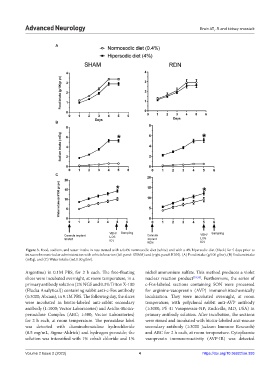
            Figure 3. Food, sodium, and water intake in rats treated with a 0.4% normosodic diet (white) and with a 4% hipersodic diet (black) for 5 days prior to
            intracerebroventricular administration with vehicle/losartan (left panel: SHAM) and (right panel: RDN). (A) Food intake (g/100 g/bw), (B) Sodium intake
            (mEq), and (C) Water intake (mL/100 g/bw).


            Argentina) in 0.1M PBS, for 2  h each. The free-floating   nickel ammonium sulfate. This method produces a violet
            slices were incubated overnight, at room temperature, in a   nuclear reaction product [33,34] . Furthermore, the series of
            primary antibody solution (2% NGS and 0.3% Triton X-100   c-Fos-labeled sections containing SON were processed
            (Flucka Analytical)) containing rabbit anti-c-Fos antibody   for arginine-vasopressin (AVP) immunohistochemically
            (1:3000; Abcam), in 0.1M PBS. The following day, the slices   localization. They were incubated overnight, at room
            were incubated in biotin-labeled anti-rabbit secondary   temperature, with polyclonal rabbit anti-AVP antibody
            antibody (1:1000; Vector Laboratories) and Avidin-Biotin-  (1:3000; PS 41 Vasopressin-NP; Rockville, MD, USA) in
            peroxidase Complex (ABC; 1:500; Vector Laboratories)   primary antibody solution. After incubation, the sections
            for 2 h each, at room temperature. The peroxidase label   were rinsed and incubated with biotin-labeled anti-mouse
            was detected with diaminobenzidine hydrochloride   secondary antibody (1:3000 Jackson Immune Research)
            (0.5 mg/mL, Sigma-Aldrich) and hydrogen peroxide; the   and ABC for 2 h each, at room temperature. Cytoplasmic
            solution was intensified with 1% cobalt chloride and 1%   vasopressin immunoreactivity (AVP-IR) was detected


            Volume 2 Issue 2 (2023)                         4                          https://doi.org/10.36922/an.393

