


Page 25 - AN-2-4
P. 25
Advanced Neurology                                          Futile recanalization of acute basilar artery occlusion


            Table 2. Independent predictors of futile recanalization in ABAO patients
            Variables                      Univariate logistic regression analysis  Multivariate logistic regression analysis
                                         β    OR      95% CI        P         β       OR       95% CI     P
            Ln (SII)                   0.835  2.306  1.398 – 3.804  0.001
            Ln (SIRI)                  0.793  2.211  1.365 – 3.581  0.001    1.050    2.857   1.518 – 5.380  0.001
            ALP                        0.025  1.025  1.005 – 1.046  0.013
            Intravenous rt-PA          1.256  3.511  1.218 – 10.116   0.020  2.194    8.974  2.315 – 34.788  0.002
            NIHSS score                0.058  1.060  1.017 – 1.104  0.005
            Procedure time             0.026  1.026  1.010 – 1.042  0.001    0.027    1.028   1.007 – 1.050  0.010
            ACGS-BAO                   -1.048  0.350  0.206 – 0.597  <0.001  -1.070   0.343   0.179 – 0.658  0.001
            HT                         2.134  8.449  1.871 – 38.155  0.006
            Surgical modalities
             Intra-arterial thrombolysis             Reference
             Stent-retriever thrombectomy  1.634  5.125  1.910 – 13.750  0.001
             aspiration thrombectomy   0.428  1.534  0.548 – 4.293  0.415
            Abbreviations: ABAO: Acute basilar artery occlusion; ACGS-BAO: Angiographic Collateral Grading System for Basilar Artery Occlusion;
            ALP: Alkaline phosphatase; HT: Hemorrhagic transformation; CI: Confidence interval; Ln (SII): Natural logarithm-transformed of systemic immune
            inflammation index; Ln (SIRI): Natural logarithm-transformed of systemic inflammation response index; OR: Odds ratio; rt-PA: Recombinant tissue
            plasminogen activator; NIHSS: National Institutes of Health Stroke Scale.

                                                               patients within 6 h of ABAO onset, the combination of IVT
                                                               and EVT (IVT + EVT) can potentially reduce mortality
                                                               rates . Coincidentally, another study demonstrated that,
                                                                   [22]
                                                               compared to direct EVT, patients with ABAO who received
                                                               IVT+EVT treatment within 24  h of onset had better
                                                               functional outcomes at 90 days . However, in this study,
                                                                                        [23]
                                                               patients receiving EVT + IVT treatment exhibited a higher
                                                               rate of FR. We attribute this observation to the increased
                                                               rate of HT (26.7% vs. 21.3%) and a higher rate of severe
                                                               stroke (NIHSS > 20) (63.3% vs. 31.5%) in the IVT+EVT
                                                               group. Additionally, several patients were transferred to
                                                               our hospital after receiving intravenous thrombolysis at a
                                                               primary stroke center, implying a longer OPT. Therefore,
                                                               it is particularly important to choose a more appropriate
                                                               vascular recanalization method and predict FR in these
                                                               complex cases.
                                                                 Few studies have delved into the mechanisms of FR.
                                                               Existing research suggests that reperfusion injury and
                                                               the “no-reflow” phenomenon are intricately linked to the
                                                               prognosis of acute cerebral infarction, with considerable
                                                               influence from the opening of collateral circulation and
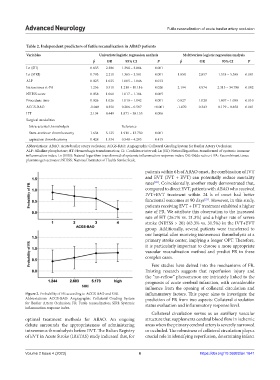
            Figure 2. Probability of FR according to ACGS-BAO and SIRI.  inflammatory factors. This paper aims to investigate the
            Abbreviations: ACGS-BAO: Angiographic Collateral Grading System   prediction of FR from two aspects: Collateral circulation
            for Basilar Artery Occlusion; FR: Futile recanalization; SIRI: Systemic   status evaluation and inflammatory response level.
            inflammation response index.
                                                                 Collateral circulation serves as an auxiliary vascular
            optimal  treatment  methods  for  ABAO. An  ongoing   structure that supplements cerebral blood flow in ischemic
            debate surrounds the appropriateness of administering   areas when the primary cerebral artery is severely narrowed
            intravenous thrombolysis before EVT. The Italian Registry   or occluded. The robustness of collateral circulation plays a
            of EVT in Acute Stroke (IRETAS) study indicated that, for   crucial role in identifying reperfusion, determining infarct


            Volume 2 Issue 4 (2023)                         6                         https://doi.org/10.36922/an.1641

