


Page 27 - AN-2-4
P. 27
Advanced Neurology                                          Futile recanalization of acute basilar artery occlusion


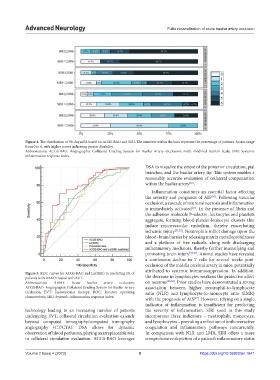
            Figure 4. The distribution of 90-day mRS based on ACGS-BAO and SIRI. The numbers within the bars represent the percentage of patients. Scores range
            from 0 to 6, with higher scores indicating greater disability.
            Abbreviations: ACGS-BAO: Angiographic Collateral Grading System for Basilar Artery Occlusion; mRS: modified Rankin Scale; SIRI: Systemic
            inflammation response index.

                                                               DSA to visualize the extent of the posterior circulation, pial
                                                               branches, and the basilar artery tip. This system enables a
                                                               reasonably accurate evaluation of collateral compensation
                                                               within the basilar artery .
                                                                                  [16]
                                                                 Inflammation constitutes an essential factor affecting
                                                               the severity and prognosis of AIS . Following vascular
                                                                                           [30]
                                                               occlusion, a cascade of neuronal necrosis and inflammation
                                                               is immediately activated . In the presence of fibrin and
                                                                                   [13]
                                                               the adhesion molecule P-selectin, leukocytes and platelets
                                                               aggregate, forming blood-platelet-leukocyte clusters that
                                                               induce microvascular embolism, thereby exacerbating
                                                               ischemic injury [31,32] . Neutrophils inflict damage upon the
                                                               blood–brain barrier by releasing matrix metalloproteinases
                                                               and a plethora of free radicals, along with discharging
                                                               inflammatory mediators, thereby further intensifying and
                                                               promoting brain injury [33,34] . Animal studies have revealed
                                                               a continuous decline in T cells for several weeks post-
                                                               occlusion of the middle cerebral artery in mice, potentially
                                                               attributed to systemic immunosuppression. In addition,
            Figure 5. ROC curves for ACGS-BAO and Ln(SIRI) in predicting FR of
            patients with ABAO treated with EVT.               the decrease in lymphocytes weakens the protective effect
            Abbreviations:  ABAO:  Acute  basilar  artery  occlusion;  on neurons [35,36] . Prior studies have demonstrated a strong
            ACGS-BAO: Angiographic Collateral Grading System for Basilar Artery   association between higher neutrophil-to-lymphocyte
            Occlusion; EVT: Endovascular therapy; ROC: Receiver operating   ratio (NLR) and lymphocyte-to-monocyte ratio (LMR)
            characteristic; SIRI: Systemic inflammation response index.
                                                               with the prognosis of AIS . However, relying on a single
                                                                                    [37]
                                                               indicator of inflammation is insufficient for predicting
            technology  leading  to  an  increasing  number  of  patients   the severity of inflammation. SIRI used in this study
            undergoing EVT, collateral circulation evaluation extends   incorporates three indicators – neutrophils, monocytes,
            beyond computed  tomography/computed tomography    and lymphocytes – providing a reflection of both overactive
            angiography  (CT/CTA).  DSA  allows  for  dynamic   coagulation and inflammatory pathways concurrently.
            observation of blood perfusion, playing an irreplaceable role   In comparison with NLR and LMR, SIRI offers a more
            in collateral circulation evaluation. ACGS-BAO leverages   comprehensive depiction of a patient’s inflammatory status


            Volume 2 Issue 4 (2023)                         8                         https://doi.org/10.36922/an.1641

