


Page 28 - AN-2-4
P. 28
Advanced Neurology                                          Futile recanalization of acute basilar artery occlusion


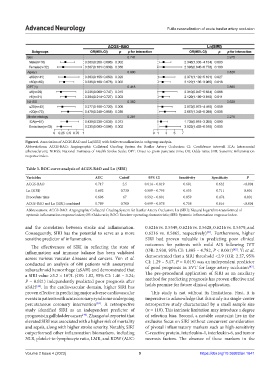
            Figure 6. Association of ACGS-BAO and Ln(SIRI) with futile recanalization in subgroup analysis.
            Abbreviations:  ACGS-BAO:  Angiographic  Collateral  Grading  System  for  Basilar  Artery  Occlusion;  CI:  Confidence  interval;  ICA:  Intracranial
            atherosclerotic; NIHSS: National Institutes of Health Stroke Scale; OPT: Onset-to-groin puncture time; OR: Odds ratio; SIRI: Systemic inflammation
            response index.

            Table 3. ROC curve analysis of ACGS-BAO and Ln (SIRI)
            Variables                    AUC        Cutoff      95% CI       Sensitivity   Specificity    P
            ACGS-BAO                      0.717      2.5       0.614 – 0.819   0.681         0.632      <0.001
            Ln (SIRI)                     0.692     0.730      0.589 – 0.795   0.653         0.711       0.001
            Procedure time                0.696      67        0.592 – 0.801   0.859         0.474       0.001
            ACGS-BAO and Ln (SIRI) combined  0.789  0.700      0.699 – 0.878   0.708         0.816      <0.001
            Abbreviations: ACGS-BAO: Angiographic Collateral Grading System for Basilar Artery Occlusion; Ln (SIRI): Natural logarithm-transformed of
            systemic inflammation response index; OR: Odds ratio; ROC: Receiver operating characteristic; SIRI: Systemic inflammation response index.


            and the correlation between stroke and inflammation.   0.6216 vs. 0.5349, 0.6216 vs. 0.5628, 0.6216 vs. 0.5579, and
            Consequently, SIRI has the potential to serve as a more   0.6216  vs. 0.5865, respectively) . Furthermore, higher
                                                                                         [41]
            sensitive predictor of inflammation.               SIRI had proven valuable in predicting poor clinical
              The effectiveness of SIRI in reflecting the state of   outcomes for patients with mild AIS following IVT
                                                                                                    [42]
            inflammation and immune balance has been validated   (OR: 2.938, 95% CI: 1.805 – 4.782, P < 0.001) . Yi et al.
            across various vascular diseases and cancers. Yun  et al.   demonstrated that a SIRI threshold <2.9 (OR: 2.27, 95%
            conducted an analysis of 680  patients with aneurysmal   CI: 1.29 – 5.17, P = 0.019) was an independent predictor
                                                                                                           [43]
            subarachnoid hemorrhage (aSAH) and demonstrated that   of good prognosis in EVT for large artery occlusion .
            a SIRI value ≥3.2 × 10 /L (OR: 1.82, 95% CI: 1.46 – 3.24;   The pre-procedural application of SIRI as an auxiliary
                              9
            P = 0.021) independently predicted poor prognosis after   method for predicting prognosis has proven effective and
            aSAH . In the cardiovascular domain, higher SIRI has   holds promise for future clinical application.
                 [38]
            proven effective in predicting major adverse cardiovascular   This study is not without its limitations. First, it is
            events in patients with acute coronary syndrome undergoing   imperative to acknowledge that this study is a single-center
            percutaneous coronary intervention . A  retrospective   retrospective study characterized by a small sample size
                                          [39]
            study identified SIRI  as an independent predictor of   (n = 110). This intrinsic limitation may introduce a degree
            prognosis in gallbladder cancer . Zhang et al. reported that   of selection bias. Second, a notable constraint lies in the
                                    [40]
            elevated SIRI was associated with a higher risk of mortality   exclusive focus on SIRI without concurrent consideration
            and sepsis, along with higher stroke severity. Notably, SIRI   of pivotal inflammatory markers such as high-sensitivity
            outperformed other inflammation biomarkers, including   C-reactive protein, interleukin-1, interleukin-6, and tumor
            NLR, platelet-to-lymphocyte ratio, LMR, and RDW (AUC:   necrosis factors. The absence of these markers in the


            Volume 2 Issue 4 (2023)                         9                         https://doi.org/10.36922/an.1641

