


Page 26 - AN-2-4
P. 26
Advanced Neurology                                          Futile recanalization of acute basilar artery occlusion


                         A                 B                 C                 D


                         E                 F                 G                 H


                         I                 J                 K                 L


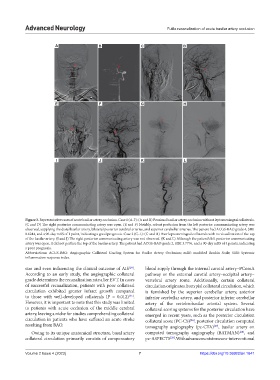
            Figure 3. Representative cases of acute basilar artery occlusion. Case 1 (A-F): (A and B) Proximal basilar artery occlusion without leptomeningeal collaterals.
            (C and D) The right posterior communicating artery was open. (E and F) Notably, robust perfusion from the left posterior communicating artery was
            observed, supplying the distal basilar artery, bilateral posterior cerebral arteries, and superior cerebellar arteries. The patient had ACGS-BAO grade 4, SIRI
            0.6244, and a 90-day mRS of 1 point, indicating a good prognosis. Case 2 (G-L): (G and H) Poor leptomeningeal collaterals with no visualization of the top
            of the basilar artery. (I and J) The right posterior communicating artery was not observed. (K and L) Although the patient’s left posterior communicating
            artery was open, it did not perfuse the top of the basilar artery. The patient had ACGS-BAO grade 2, SIRI 3.7776, and a 90-day mRS of 4 points, indicating
            a poor prognosis.
            Abbreviations: ACGS-BAO: Angiographic Collateral Grading System for Basilar Artery Occlusion; mRS: modified Rankin Scale; SIRI: Systemic
            inflammation response index.
            size and even influencing the clinical outcome of AIS .   blood supply through the internal carotid artery–PComA
                                                        [24]
            According to an early study, the angiographic collateral   pathway or the external carotid artery–occipital artery–
            grade determines the recanalization rate after EVT. In cases   vertebral  artery  route.  Additionally,  certain  collateral
            of successful recanalization, patients with poor collateral   circulation originates from pial collateral circulation, which
            circulation exhibited greater infarct growth compared   is furnished by the superior cerebellar artery, anterior
            to those with well-developed collaterals (P  =  0.012) .   inferior cerebellar artery, and posterior inferior cerebellar
                                                        [25]
            However, it is important to note that this study was limited   artery  of the  vertebrobasilar arterial system.  Several
            to patients with acute occlusion of the middle cerebral   collateral scoring systems for the posterior circulation have
            artery, leaving a niche for studies comprehending collateral   emerged in recent years, such as the posterior circulation
            circulation in patients who have suffered an acute stroke   collateral score (PC-CS) , posterior circulation computed
                                                                                  [26]
            resulting from BAO.                                tomography angiography (pc-CTA) , basilar artery on
                                                                                            [27]
              Owing to its unique anatomical structure, basal artery   computed tomography angiography (BATMAN) , and
                                                                                                       [28]
            collateral circulation primarily consists of compensatory   pc-ASPECTS . With advancements in neuro-interventional
                                                                         [29]
            Volume 2 Issue 4 (2023)                         7                         https://doi.org/10.36922/an.1641

