


Page 45 - ARNM-2-4
P. 45
Advances in Radiotherapy
            & Nuclear Medicine                                             Outcomes of durations in 2D and 3D BT for CCA


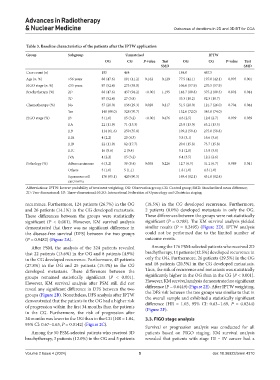
            Table 3. Baseline characteristics of the patients after the IPTW application
            Group             Subgroup                Unmatched                           IPTW
                                              OG       CG     P‑value  Test    OG         CG     P‑value  Test
                                                                      SMD                                SMD
            Case count (n)                  185       464                    184.0      467.5
            Age (n, %)        >56 years     88 (47.6)  191 (41.2)  0.162  0.129  77.5 (42.1)  197.0 (42.1)  0.995  0.001
            FIGO stage (n, %)  ≤55 years    97 (52.4)  273 (58.8)            106.6 (57.9)  270.5 (57.9)
            Brachytherapy (%)  2D           88 (47.6)  437 (94.2)  <0.001  1.195  148.7 (80.8)  375.2 (80.3)  0.892  0.014
                              3D            97 (52.4)  27 (5.8)              35.3 (19.2)  92.3 (19.7)
            Chemotherapy (%)  No            37 (20.0)  136 (29.3)  0.020  0.217  51.5 (28.0)  121.7 (26.0)  0.704  0.044
                              Yes           148 (80.0)  328 (70.7)           132.6 (72.0)  345.8 (74.0)
            FIGO stage (%)    IB            3 (1.6)   15 (3.2)  <0.001  0.476  4.6 (2.5)  12.8 (2.7)  0.999  0.059
                              IIA           22 (11.9)  71 (15.3)             23.9 (13.0)  63.2 (13.5)
                              IIB           114 (61.6)  259 (55.8)           109.2 (59.4)  275.0 (58.8)
                              IIIA          4 (2.2)   20 (4.3)               5.8 (3.1)  16.6 (3.6)
                              IIIB          22 (11.9)  82 (17.7)             29.0 (15.8)  73.7 (15.8)
                              IIIC          16 (8.6)  2 (0.4)                5.1 (2.8)  13.9 (3.0)
                              IVA           4 (2.2)   15 (3.2)               6.4 (3.5)  12.2 (2.6)
            Pathology (%)     Adenocarcinoma  6 (3.2)  39 (8.4)  0.058  0.226  12.7 (6.9)  31.2 (6.7)  0.989  0.011
                              Others        3 (1.6)   5 (1.1)                1.8 (1.0)  4.5 (1.0)
                              Squamous cell   176 (95.1)  420 (90.5)         169.4 (92.1)  431.8 (92.4)
                              carcinoma
            Abbreviations: IPTW: Inverse probability of treatment weighting; OG: Observation group; CG: Control group; SMD: Standardized mean difference;
            2D: Two-dimensional; 3D: Three-dimensional; FIGO: International Federation of Gynecology and Obstetrics staging.

            recurrence. Furthermore, 124 patients (26.7%) in the OG   (18.5%) in the CG developed recurrence. Furthermore,
            and 26 patients (14.1%) in the CG developed metastasis.   2  patients (8.0%) developed metastasis in only the OG.
            These differences between the groups were statistically   These differences between the groups were not statistically
            significant (P  < 0.001). However, KM survival analysis   significant (P = 0.788). The KM survival analysis yielded
            demonstrated that there was no significant difference in   similar results (P = 0.2495) (Figure 2D). IPTW analysis
            the disease-free survival (DFS) between the two groups   could not be performed due to the limited number of
            (P = 0.9482) (Figure 2A).                          outcome events.
              After PSM, the analysis of the 324  patients revealed   Among the 176 PSM-selected patients who received 2D
            that 22 patients (13.6%) in the OG and 8 patients (4.9%)   brachytherapy, 11 patients (12.5%) developed recurrence in
            in the CG developed recurrence. Furthermore, 45 patients   only the OG. Furthermore, 26 patients (29.5%) in the OG
            (27.8%) in the OG and 25  patients (15.4%) in the CG   and 18 patients (20.5%) in the CG developed metastasis.
            developed metastasis. These differences between the   Thus, the risk of recurrence and metastasis was statistically
            groups remained statistically significant (P  < 0.001).   significantly higher in the OG than in the CG (P < 0.001).
            However,  KM  survival analysis  after  PSM  still did  not   However, KM survival analysis demonstrated no significant
            reveal any significant difference in DFS between the two   difference (P = 0.6449) (Figure 2E). After IPTW weighting,
            groups (Figure 2B). Nonetheless, DFS analysis after IPTW   the DFS risk between the two groups was similar to that in
            demonstrated that the patients in the OG had a higher risk   the overall sample and exhibited a statistically significant
                                                               difference (HR = 1.03, 95% CI: 0.63−1.69,  P = 0.0244)
            of progression within the first 34 months than the patients   (Figure 2F).
            in the CG. Furthermore, the risk of progression after
            34 months was lower in the OG than in the CG (HR = 1.04,   3.3. FIGO stage analysis
            95% CI: 0.67−1.63, P = 0.0142) (Figure 2C).
                                                               Survival or progression analysis was conducted for all
              Among the 50 PSM-selected patients who received 3D   patients based on FIGO staging. KM survival analysis
            brachytherapy, 3 patients (12.0%) in the OG and 5 patients   revealed that patients with stage III – IV cancer had a


            Volume 2 Issue 4 (2024)                         5                              doi: 10.36922/arnm.4310

