


Page 48 - ARNM-2-4
P. 48
Advances in Radiotherapy
            & Nuclear Medicine                                             Outcomes of durations in 2D and 3D BT for CCA


            A                         B                      C                        D


            E                         F                      G                        H


             I                                               K
                                       J


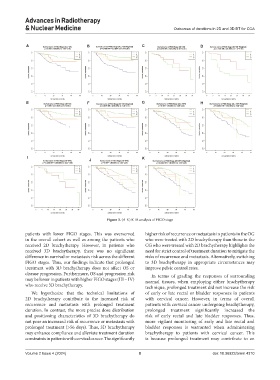
                                              Figure 3. (A-K) K-M analysis of FIGO stage

            patients with lower FIGO stages. This was overserved   higher risk of recurrence or metastasis in patients in the OG
            in the overall cohort as well as among the patients who   who were treated with 2D brachytherapy than those in the
            received 2D  brachytherapy. However,  in patients  who   CG who were treated with 2D brachytherapy highlights the
            received 3D brachytherapy, there was no significant   need for strict control of treatment duration to mitigate the
            difference in survival or metastasis risk across the different   risks of recurrence and metastasis. Alternatively, switching
            FIGO stages.  Thus, our findings indicate that prolonged   to 3D brachytherapy in appropriate circumstances may
            treatment with 3D brachytherapy does not affect OS or   improve pelvic control rates.
            disease progression. Furthermore, OS and progression risk   In terms of grading the responses of surrounding
            may be lower in patients with higher FIGO stages (III – IV)   normal tissues, when employing either brachytherapy
            who receive 3D brachytherapy.                      technique, prolonged treatment did not increase the risk
              We hypothesize that the technical limitations of   of early or late rectal or bladder responses in patients
            2D  brachytherapy  contribute  to  the  increased  risk  of   with cervical cancer. However, in terms of overall
            recurrence  and  metastasis  with  prolonged  treatment   patients with cervical cancer undergoing brachytherapy,
            duration. In contrast, the more precise dose distribution   prolonged treatment significantly  increased the
            and positioning characteristics of 3D brachytherapy do   risk of early rectal and late bladder responses. Thus,
            not pose an increased risk of recurrence or metastasis with   more vigilant monitoring of early and late rectal and
            prolonged treatment (>56 days). Thus, 3D brachytherapy   bladder  responses  is  warranted  when  administering
            may enhance compliance and alleviate treatment duration   brachytherapy to patients with cervical cancer. This
            constraints in patients with cervical cancer. The significantly   is because prolonged treatment may contribute to an


            Volume 2 Issue 4 (2024)                         8                              doi: 10.36922/arnm.4310

