


Page 46 - ARNM-2-4
P. 46
Advances in Radiotherapy
            & Nuclear Medicine                                             Outcomes of durations in 2D and 3D BT for CCA


             A                               B                                C


             D                                E                                F


             G                                H                                I


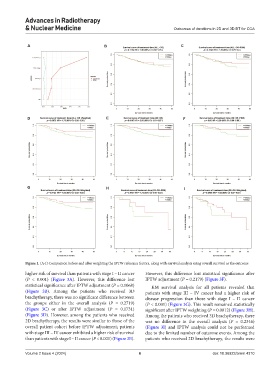
            Figure 1. (A-I) Comparison before and after weighting the IPTW reference factors, along with survival analysis using overall survival as the outcome

            higher risk of survival than patients with stage I – II cancer   However,  this difference lost  statistical significance  after
            (P  < 0.001) (Figure  3A). However, this difference lost   IPTW adjustment (P = 0.2179) (Figure 3F).
            statistical significance after IPTW adjustment (P = 0.1068)   KM survival analysis for all patients revealed that
            (Figure  3B). Among the patients who received 3D   patients with stage III – IV cancer had a higher risk of
            brachytherapy, there was no significant difference between   disease progression than those with stage I – II cancer
            the groups either in the overall analysis (P  = 0.2719)   (P < 0.001) (Figure 3G). This result remained statistically
            (Figure  3C) or after IPTW adjustment (P = 0.1731)   significant after IPTW weighting (P = 0.0012) (Figure 3H).
            (Figure 3D). However, among the patients who received   Among the patients who received 3D brachytherapy, there
            2D brachytherapy, the results were similar to those of the   was no difference in the overall analysis (P = 0.2346)
            overall patient cohort before IPTW adjustment; patients   (Figure  3I)  and IPTW analysis  could  not be performed
            with stage III – IV cancer exhibited a higher risk of survival   due to the limited number of outcome events. Among the
            than patients with stage I – II cancer (P < 0.001) (Figure 3E).   patients who received 2D brachytherapy, the results were


            Volume 2 Issue 4 (2024)                         6                              doi: 10.36922/arnm.4310

