


Page 47 - ARNM-2-4
P. 47
Advances in Radiotherapy
            & Nuclear Medicine                                             Outcomes of durations in 2D and 3D BT for CCA


            A                                  B                              C


            D                                E                                 F


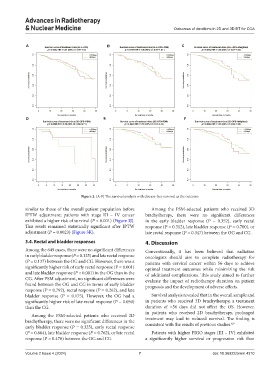
                                    Figure 2. (A-F) The survival analysis with disease-free survival as the outcome

            similar to those of the overall patient population before   Among  the PSM-selected patients who received 3D
            IPTW adjustment; patients with stage III – IV cancer   brachytherapy, there were no significant differences
            exhibited a higher risk of survival (P < 0.001) (Figure 3J).   in the  early bladder  response  (P = 0.352),  early rectal
            This result remained statistically significant after IPTW   response (P = 0.312), late bladder response (P = 0.700), or
            adjustment (P = 0.0023) (Figure 3K).               late rectal response (P = 0.347) between the OG and CG.
            3.4. Rectal and bladder responses                  4. Discussion

            Among the 649 cases, there were no significant differences   Conventionally, it has been believed that radiation
            in early bladder response (P = 0.125) and late rectal response   oncologists should aim to complete radiotherapy for
            (P = 0.137) between the OG and CG. However, there was a   patients with cervical cancer within 56  days to achieve
            significantly higher risk of early rectal response (P = 0.001)   optimal treatment outcomes while minimizing the risk
            and late bladder response (P < 0.001) in the OG than in the   of additional complications. This study aimed to further
            CG. After PSM adjustment, no significant differences were   evaluate the impact of radiotherapy duration on patient
            found between the OG and CG in terms of early bladder   prognosis and the development of adverse effects.
            response (P = 0.792), rectal response (P = 0.262), and late
            bladder  response  (P =  0.175).  However,  the  OG  had  a   Survival analysis revealed that in the overall sample and
            significantly higher risk of late rectal response (P = 0.050)   in patients who received 3D brachytherapy, a treatment
            than the CG.                                       duration of >56  days did not affect the OS. However,
                                                               in patients who received 2D brachytherapy, prolonged
              Among  the PSM-selected patients who received 2D
            brachytherapy, there were no significant differences in the   treatment may lead to reduced survival. The finding is
                                                                                                   6,9
            early bladder response (P = 0.325), early rectal response   consistent with the results of previous studies.
            (P = 0.664), late bladder response (P = 0.762), or late rectal   Patients with higher FIGO stages (III – IV) exhibited
            response (P = 0.470) between the OG and CG.        a significantly higher survival or progression risk than


            Volume 2 Issue 4 (2024)                         7                              doi: 10.36922/arnm.4310

